Why back strain matters in European warehouses: the evidence so far
For an operations director, absence is where this lands on the books. The same OSHwiki page reports that more than half of workers with MSDs missed at least one day, and around 23% missed ten days or more. Strain also feeds turnover, and it makes an ageing workforce harder to keep in manual roles.
A back support exoskeleton for warehouse workers is one way to reduce that load. It is worth being clear about what the evidence does and does not yet say. Field evidence from real warehouses is still limited. One pilot test of an active back-support device for palletising in a logistics warehouse involved just six workers, and its authors describe evidence from real industrial settings as limited (field evaluation, Electronics). Laboratory work exists for warehouse-style tasks, including a soft active exosuit tested over an hour-long simulated routine of walking, lifting and pallet building (Nature Communications Engineering).
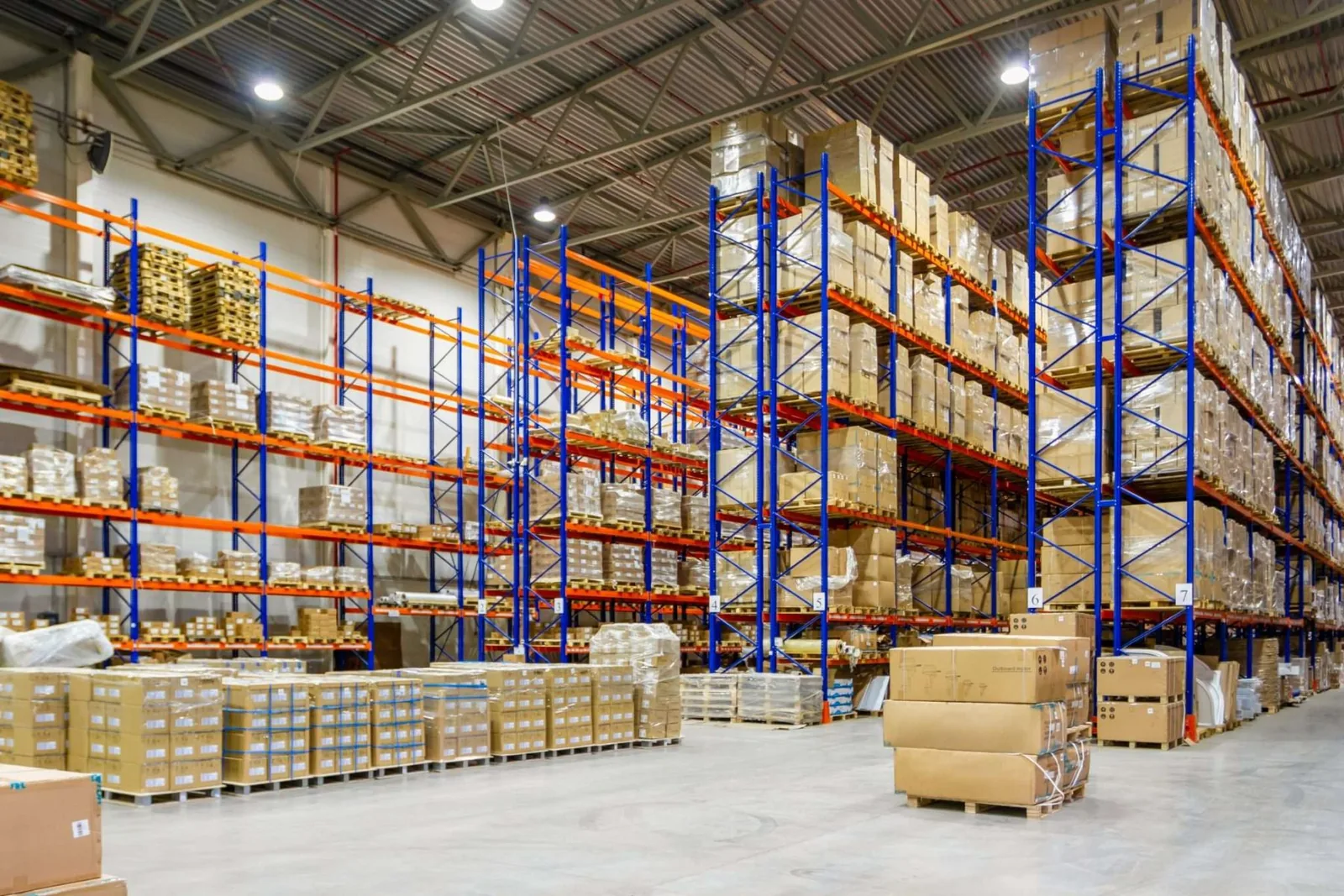
The practical reading: a device is not a guaranteed fix, and results depend on the task, the fit and the person. That is the case for testing in your own building before you commit.
Passive versus active back support: matching the device to warehouse tasks
The first design choice is how the device delivers assistance. Passive devices use springs or elastic elements that store energy as the wearer bends and give it back during the lift. Active devices use motors and sensors to add assistance. A review of the field notes that active systems are more complex and can provide higher support, while passive systems are simpler with lower assistance (PMC review). Neither is better in the abstract. The question is which suits the work.
Start from the task, not the product. Warehouse back loading falls into a few distinct patterns:
- Repeated forward bending and lifting from floor or low shelf level, typical of order picking and loading cages. This is where a back device has the clearest role.
- Pallet building and palletising, with lifts at varied heights and frequent trunk rotation. Fit and range of motion matter as much as raw assistance here.
- Walking-heavy picking with occasional lifts, where a bulky or restrictive device may cost more in comfort than it returns in support.
- Overhead shelf work, which loads the shoulders rather than the back and is usually better served by a shoulder device.
Active designs add batteries, charging routines and a device that adds complexity to daily use, so the team needs to be comfortable with that. Active evidence from real warehouses is still thin, so test any claimed benefit against your own tasks.
Comfort and acceptance decide whether a device gets worn at all. Body size, belt and thigh-strap fit, heat under a hi-vis vest, and how the device sits when a worker climbs into a lorry or onto a truck all affect real use. A device that shines in a demonstration can still be abandoned within days if it catches on equipment or chafes. The Ryggo Exoskeleton Advisor is built to narrow the field by task and operation. You can browse back and shoulder devices on the exoskeletons page, where they sit side by side from multiple vendors rather than from a single brand's catalogue.
Ready to find the right device for your operation?
Checking PPE, machinery and standards status before you trial a device
Before a device goes onto a worker's body, your safety adviser should know how it is classified. EU-OSHA's discussion papers cover the main frameworks, notably the Machinery Directive and the personal protective equipment (PPE) regime, and state that the use of occupational exoskeletons is still rather limited (EU-OSHA discussion paper). A companion paper, Exoskeletons and OSH, goes through the occupational safety and health questions in more detail.
Classification matters because it shapes your obligations. Powered devices may fall under machinery rules, and a device can in principle touch more than one framework. Confirm the current classification and standards status of any device you shortlist with your own safety adviser and the device's documentation.
A practical pre-trial checklist for HSE managers:
- Ask the vendor for the device's declared classification and its conformity documentation.
- Review the instructions for use, intended tasks and contraindications with your safety adviser.
- Update the task risk assessment to include the device, covering new risks such as snagging, restricted movement or battery handling.
- Brief the works council or worker representatives where your national practice expects it.
This is groundwork, not a barrier. A trial that starts with the paperwork in order is easier to defend internally and easier to scale later.
Not sure which exoskeleton fits your task? Let the Ryggo advisor match it independently.
Running a workplace trial: what to measure over two, four or eight weeks, and how to win worker buy-in
A trial in your own warehouse answers what no brochure can: whether this device works for these tasks and these people. Under the Deploy & Decide programme, buyers can trial any listed device for two, four or eight weeks, and the how a trial works page explains the steps. The test fee and what it covers are explained in the guide to the cost of exoskeleton trials, and the wider rationale is in the try-before-you-buy buyer's guide.
Choose the length to match the question. Two weeks suits a first check of fit and basic acceptance. Four weeks lets the novelty fade and shows whether people keep wearing the device. Eight weeks gives a more reliable read across varied order profiles and peak periods.
Define success before you begin. Pick a small set of measures you can actually collect:
- Sustained use: how many wearers are still using the device by the final week, and for how much of the shift.
- Self-reported discomfort: a simple daily or weekly rating by body region, compared with a baseline taken before the trial.
- Fit and comfort issues: adjustments needed, heat, chafing, interference with equipment.
- Task performance: whether picking or palletising rates held steady. A device that slows people down will not survive.
- Operational signals: absence and reported strain in the trial group, read cautiously over a short period.
Record a baseline first, and use the same tasks and shifts for comparison where you can. Ergonomic assessment helps frame this. Ryggo offers a free ergonomic analysis from a 30-second video that can show which tasks carry the highest posture risk.
Win buy-in from the floor. Workers worry about looking weak, being slowed down, or being told the device means harder targets. Address those worries head-on. Involve team leaders and a mix of volunteers by age, build and role, not only the enthusiasts. Explain that the trial tests the device, not the person. Let wearers adjust the device and give feedback, and act on it visibly. Make participation voluntary where practicable, and say plainly that results will not be used to raise rates. A device people helped choose is far more likely to be worn.
Making the business case and moving from pilot to rollout
A good trial ends in a decision, not a drift. Many pilots stall because nobody defined what would count as enough, a pattern sometimes called pilot purgatory. Set the decision rule up front. For example: a given share of wearers still use the device at the end, discomfort scores improve for the targeted tasks, and throughput holds.
For the financial case, count the costs you can observe. Absence is the clearest: workers with MSDs miss more days, and a European industrial review puts the cost of work-related MSDs in Europe at around €240 billion, roughly 2% of EU-15 GDP (BMC Musculoskeletal Disorders review). That is a secondary review using figures from an earlier period, so treat it as context, not a forecast for your site. Your own absence, turnover and handling-related incident data will make a stronger basis. The payback period guide shows how to set that calculation out, and pricing shows how purchase options fit alongside trials.
Be honest about what the numbers can support. Warehouse field evidence for back devices is still developing, so a business case built on your own trial data is more credible than one borrowed from a vendor claim. Be wary of headline percentages for strain reduction that come without a visible source.
When you move to rollout, keep what worked in the trial:
- Roll out by task group, starting where the trial showed the clearest benefit.
- Standardise fitting and onboarding, with trained fitters and spare sizes.
- Plan the logistics: storage, cleaning, charging for active devices, and a named owner for the programme.
- Keep measuring sustained use and discomfort after rollout, and review at set intervals.
- Keep a route to alternatives, since a device that suits picking may not suit palletising.
A back support exoskeleton for warehouse workers earns its place when it fits the task, the people and the documentation. Testing in your own operation, with clear measures and honest expectations, is the most reliable way to find that out.
Find the right device before you trial anything
The Ryggo advisor maps your task, environment, and requirements to compatible devices — independently, across the full European market.