Key Takeaways
- Understand how lumbar support may redistribute some lifting loads, and why the task matters when assessing potential benefit.
- Identify the work patterns and movements that can contribute to lower-back strain and fatigue in manufacturing and logistics.
- Compare active assistance with other support approaches by considering the movements workers perform throughout a shift.
- Assess comfort, mobility and task fit in real working conditions before deciding whether to introduce a device.
- Use vendor-neutral recommendations and a structured trial to guide selection and evaluate operational fit.
Table of Contents
- How lumbar-support exoskeletons may reduce lower-back strain
- Lower-back pain prevalence and workplace accidents
- Employee fatigue and work quality
- Active exoskeleton assistance
- Exoskeleton use in logistics and manufacturing
- Ryggo
How lumbar-support exoskeletons may reduce lower-back strain
A lumbar-support exoskeleton is designed to redistribute some effort during selected movements. Its usefulness depends on how well its support matches the task, posture and movement pattern.
Workplace Ergonomics and Back Support
In workplace ergonomics, a back exoskeleton for manufacturing is one possible support, not a substitute for reviewing the task itself. For example, assess whether workers repeatedly bend to handle low pallets or hold a forward-leaning posture at a workstation. Lumbar-support designs are intended to redistribute load towards the hips and legs, which changes where some muscular effort is carried. The device does not replace other workplace controls.
How much do industrial back exoskeletons cost? The price depends on the case and is given after a quote request; relevant factors include device type, support mechanism and configuration for the work.
Supported Lifting and Posture Tasks
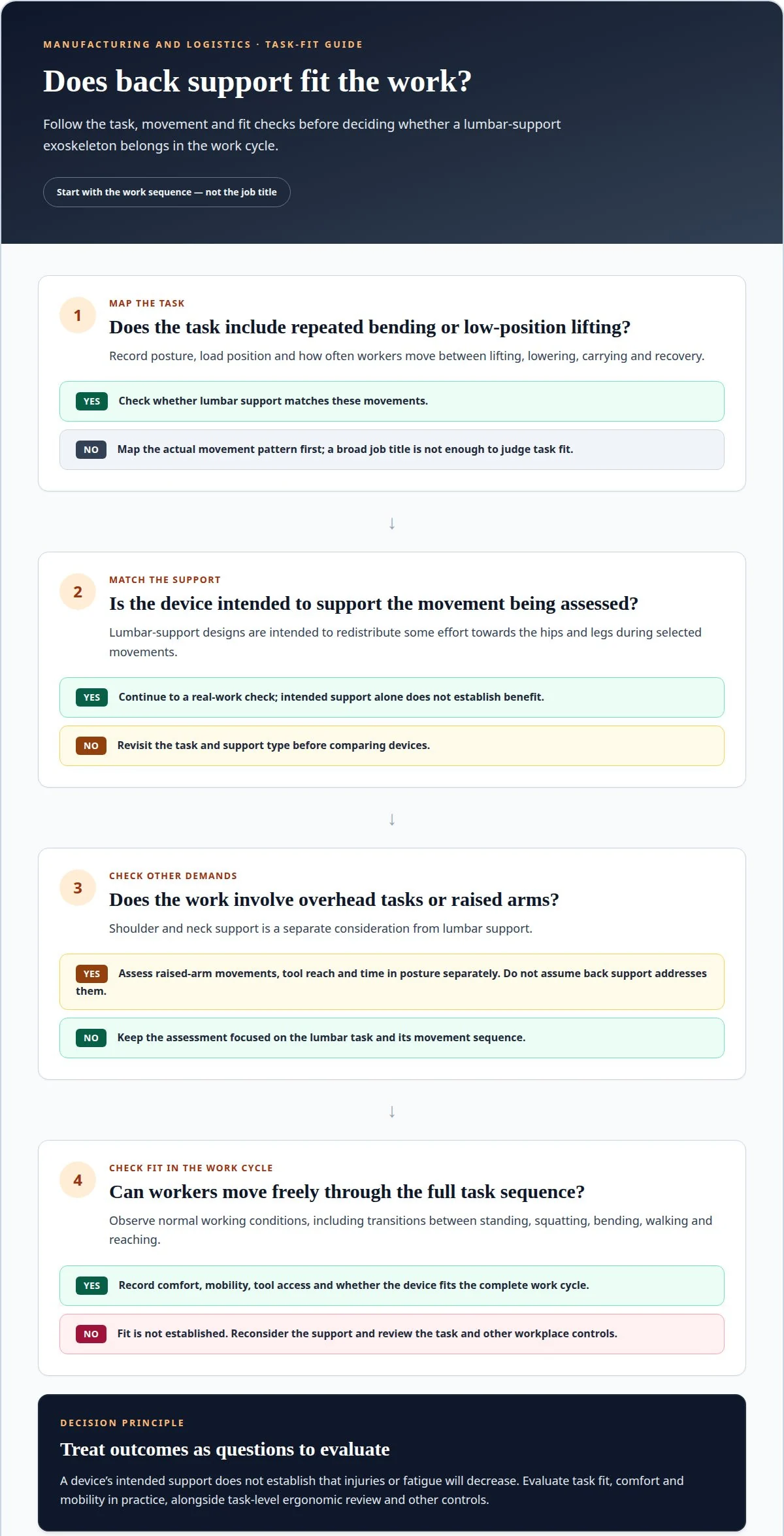
Industrial exoskeletons may support load carrying, squatting, tool use, mobility and overhead work. For example, repeated lifting from a low position in a warehouse differs from holding a tool above shoulder height on a factory floor. Map the movement sequence, load position and time spent in each posture before selecting support. Task fit, rather than a broad job title, is the useful basis for comparison.
Shoulder and neck support is a separate consideration from lumbar support. Do not assume a back-supporting device will reduce shoulder or neck effort during overhead assembly. Assess those movements directly, including tool reach and time spent with raised arms.
Risks and Limitations
Fit matters. The National Center for Biotechnology Information notes that proper fit before use may help reduce side effects. During a workplace assessment, examine whether the device restricts bending, walking, turning or access to tools. A support suited to repeated lifting may interfere with a task that requires frequent transitions between standing, squatting and reaching. Comfort and mobility should be considered alongside the intended support.
Do back exoskeletons reduce workplace injuries or fatigue? They are designed to support posture and reduce muscular effort in selected tasks, but this purpose does not establish that injuries or fatigue will decrease. Treat those outcomes as questions for a task-based evaluation, not assumed results. In practice, record whether employees can complete the required movements comfortably and whether the device fits the work cycle.
In practical terms, evaluate the movements and postures that place demand on the lower back, rather than treating the device as a general solution. Compare the assistance offered with the task and consider whether the worker can still move and work comfortably. A suitable support should complement task-level ergonomic review and other controls, with fit and mobility checked during use. Keep the decision tied to the specific task, and reassess if the work pattern or support needs change.
Lower-back pain prevalence and workplace accidents
Before selecting back support, manufacturers should evaluate the actual tasks, postures and worker fit. Map repeated movements, identify where physical demand arises, then assess whether the device lets workers perform the task freely.
Manufacturing Tasks and Risk Factors
Start with the work sequence, not the job title. At an assembly station, for example, workers may repeatedly reach, bend and turn while handling components. At a packing area, low work surfaces can require repeated trunk flexion. Record posture, load position and task transitions. These details help distinguish tasks suited to back support from those requiring unrestricted movement.
Connecting concerns to specific movements
Workplace ergonomic analysis should connect recorded concerns to specific movements. Compare each task cycle across lifting, lowering, carrying and recovery phases, noting where workers bend, twist or hold a posture. Then consider whether back support fits those phases without restricting access, walking or task changes. A device’s intended support is not evidence that workplace injuries will fall.
For a practical evaluation, involve the workers who perform the task and observe normal working conditions. Check device fit, comfort and freedom of movement across the full sequence, including transitions between workstations. A structured ergonomic assessment can help connect observed postures with the type of support under consideration. Focus on the task rather than assuming one solution suits every worker.
Employee fatigue and work quality
Fatigue can build across a shift when workers repeat physically demanding movements. During a production run, repeated lifting, lowering and handling may leave less capacity for later tasks. A back-support exoskeleton is designed to assist selected movements, but its practical value depends on whether workers can use it throughout their actual work cycle.
Assess the work, not just end-of-shift complaints. Observe a representative task at its normal pace, including how workers pick up, carry and place materials. Note where posture changes and effort appears to accumulate. For example, compare work at waist height with frequent bending to reach a low container.
Assess work quality separately. In a packing operation, check whether workers can still reach materials, handle tools and complete each step smoothly while wearing the device. Look for interruptions, awkward transitions or adjustments that distract from the task. These observations help distinguish useful support from equipment that complicates the work sequence.
Use a consistent evaluation method. Before introducing a device, document the task sequence, worker feedback and observable work issues. During a workplace trial, repeat the observations under comparable conditions. Ask workers about comfort and perceived effort after specific tasks, such as repeated lifting or prolonged forward bending, instead of relying on a general impression of the shift.
Quality indicators should reflect the operation. A manufacturing team might track whether components are handled consistently, workers can access tools, and the device disrupts task flow. These are practical observations, not proof that an exoskeleton improves output. Keep ergonomic feedback separate from production measures so neither obscures the other.
Fit also affects acceptance. Check that the support stays in place during required movements and does not hinder walking between workstations. Someone moving between a bench and a parts rack needs more freedom of movement than someone who stays at one station. Record discomfort or repeated adjustments promptly, and reassess the fit.
Workplace ergonomics involves more than wearable support. Review workstation layout, material position and task organisation alongside the device. For example, moving frequently handled items within easier reach may reduce unnecessary bending.
Base the decision on observed performance across the task cycle. Compare worker feedback, movement quality and operational fit before and during the trial. If assistance feels useful during lifting but restricts another required movement, that trade-off matters. The aim is to support ergonomics while preserving effective work, not to treat device use as success in itself.
Ready to find the right device for your operation?
Active exoskeleton assistance
Active exoskeletons use powered components to assist selected movements. Passive systems rely on mechanical elements, such as springs, to store and return energy as the wearer bends or straightens. This distinction matters because the assistance, mobility, setup and task requirements differ between designs.
In a factory lifting task, powered assistance may respond as a worker bends or raises the torso. The mechanism can use motors, sensors and control systems to provide support during movement. Passive assistance comes from the device’s mechanical structure instead. It does not generate powered movement, so its support depends on how the wearer moves and loads the mechanism.
Neither category is automatically the better choice. Start by mapping the activity: how often workers bend, whether they carry items while moving, and how often they change direction. Repeated lifting at one workstation presents different demands from a production role that alternates between lifting, walking and tool use. Match the support pattern to the movement sequence.
Powered assistance adds factors to consider in a workplace evaluation. Assess how the device responds during the actual task, how workers move between postures, and whether its operation fits the work rhythm. For example, a worker may lift a component, turn towards a fixture, then reach forward to position it. Every transition matters, not just the lifting phase.
Passive designs also need task-based assessment. Mechanical support that assists bending may feel different during walking, squatting or reaching. Observe whether workers can complete each part of their routine without changing their technique to accommodate the device. Comfort, fit and freedom of movement matter with both powered and passive options.
For a structured comparison, use the same work sequence with each candidate device. Record worker feedback, posture changes, interruptions and ease of movement between steps. Include the people who perform the task, as their experience may reveal pressure points or restricted movements that brief observation misses. Keep the task and conditions as consistent as possible.
Judge active assistance by how well it fits the work, not by its powered mechanism alone. Consider the support needed, the movements involved and the practical demands of wearing the device. A trial in the intended work setting helps establish whether the assistance supports the task without disrupting other required movements.
Exoskeleton use in logistics and manufacturing
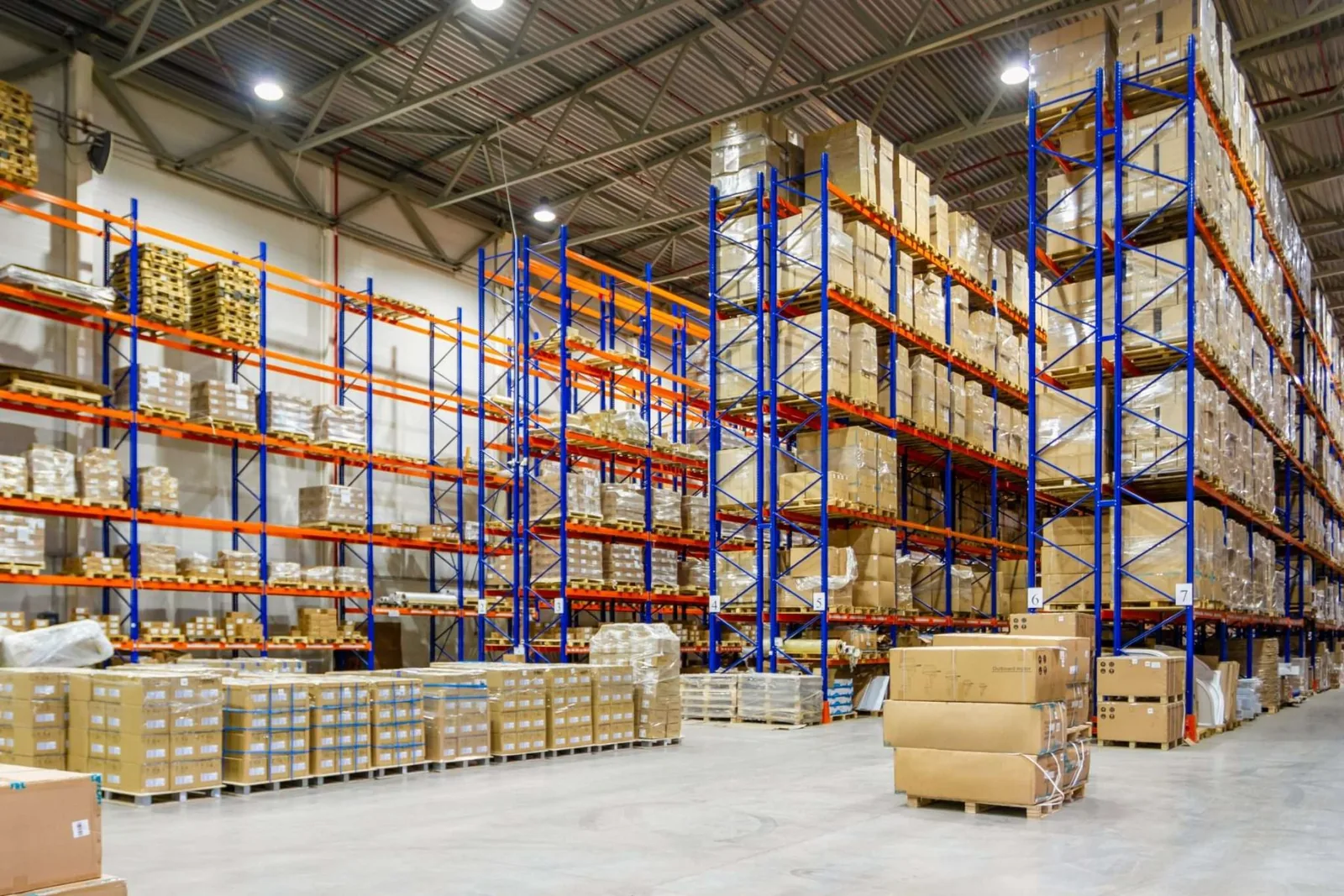
No single back exoskeleton suits every manufacturing worker. The right choice depends on the movements, work pace and transitions in the specific role. A production-line task with repeated bending differs from warehouse order picking, where workers move between shelves, loads and destinations.
In manufacturing, begin by separating the tasks within each role. An employee might lift a component, position it at a bench, then use a tool while standing. A device that supports one phase may feel restrictive in another. In logistics, compare pallet handling, picking from low shelves and carrying items through aisles. Each movement pattern helps define the support needed.
Passive designs may suit work where mechanical support matches a repeated posture or movement. The key test is how the device behaves across the full task, not just during a lift. For example, observe whether a worker can move from picking a low item to walking and placing it without interruption or awkward adjustments.
Industrial exoskeletons may support load carrying, tool use, mobility, squatting and overhead work. These are possible task applications, not a guarantee of universal fit. An overhead assembly station needs a different assessment from handling boxes at floor level. Match the device’s intended support to the task’s physical demands.
Use a task-based comparison before deciding. Record the work sequence, including material position, changes of direction and transitions between stations. Then assess each candidate during representative work. Involve the workers who perform the task, and note comfort, freedom of movement, access to tools and any need to change normal technique.
- Manufacturing: assess component handling, bench work and tool use as one sequence.
- Logistics: include low-level picking, carrying and movement through the work area.
- Both settings: compare support during the task and ease of transitions between movements.
Which back exoskeletons are best for manufacturing workers? The best fit is the device that matches the task’s support needs while allowing the required movements. A workplace trial can show whether that balance holds during real work, rather than during a brief demonstration.
Use a task-based exoskeleton comparison to narrow options around the movements your team performs. The decision should reflect ergonomic fit and operational use, not the device category alone.
Not sure which exoskeleton fits your task? Let the Ryggo advisor match it independently.
Ryggo
Ryggo helps manufacturing and logistics teams match exoskeletons to the movements and demands of specific tasks. Its AI-driven recommendations and vendor-neutral comparisons cover devices from multiple vendors, giving operations and HSE teams a clearer basis for evaluating fit. Ryggo also provides ROI calculations tailored to the operation.
When a shortlist needs validation, Ryggo’s Deploy & Decide programme lets companies trial exoskeletons in their workplace before purchase. This is useful when the key question is whether support fits the real task, work pace and employee movement, rather than a demonstration alone. The goal is an informed ergonomics decision, not choosing a device based on category or novelty.
If you’re assessing back support for your factory or logistics operation, contact Ryggo to discuss the task and the next step.
Make the next step a workplace decision
Selecting a back exoskeleton for manufacturing should begin with a clear operational question: which task needs support, and what would a good fit look like for the people doing it? Set that criterion before choosing a device. It gives HSE, operations and procurement teams a shared basis for evaluating worker experience and practical use.
Bring the task details and assessment priorities together before moving forward. A real-work trial can show whether the device fits the activity and environment. Assess any expected ergonomic benefit in practice rather than assuming it. This evidence can help your team decide whether to proceed, adapt the approach or choose another option.
For support with the next decision, contact Ryggo about workplace exoskeletons. A focused conversation can help turn your task requirements into a clear path forward.
Frequently Asked Questions
What are back exoskeletons used for in manufacturing?
Back exoskeletons provide physical support during selected tasks involving repeated bending, lifting or sustained postures. A manufacturing team might assess them for handling components at a low workstation, moving materials between stations or holding tools during overhead assembly. They are task-specific aids, not all-purpose protective equipment. Consider the full work sequence, including transitions and movements where support may be unnecessary or restrictive.
How can a manufacturer pilot and measure the effectiveness of an exoskeleton programme?
Set a baseline before the pilot, then compare the same task under similar working conditions. Track worker comfort, device use, movement restrictions, task interruptions and work quality, alongside relevant operational measures. A Deploy & Decide trial can run for 2, 4 or 8 weeks. Use the findings to decide whether the device fits the task and whether its observed ergonomic benefits justify further use.
Find the right device before you trial anything
The Ryggo advisor maps your task, environment, and requirements to compatible devices — independently, across the full European market.