Key Takeaways
- Assess the exoskeleton with the full set of PPE and work clothing used for the task, not as a standalone device.
- During a trial, observe whether straps, joints or support components interfere with protective equipment, movement or access to the work area.
- Include real workplace conditions in the assessment, especially cold-weather layers, heat, moisture, dust and abrasion.
- Use task-specific testing to judge fit, comfort and whether the device supports the intended work without disrupting existing safety measures.
- Ryggo’s vendor-neutral matching, comparison and Deploy & Decide trials can help businesses evaluate suitable options before purchasing.
Table of Contents
- 1. Potential interference with protective equipment and the work environment
- 2. Compatibility assessment with other PPE
- 3. Compatibility with cold-weather gear
- 4. Compatibility with work clothing and PPE
- 5. Which types of PPE must be compatible with occupational exoskeletons?
- Ryggo
1. Potential interference with protective equipment and the work environment
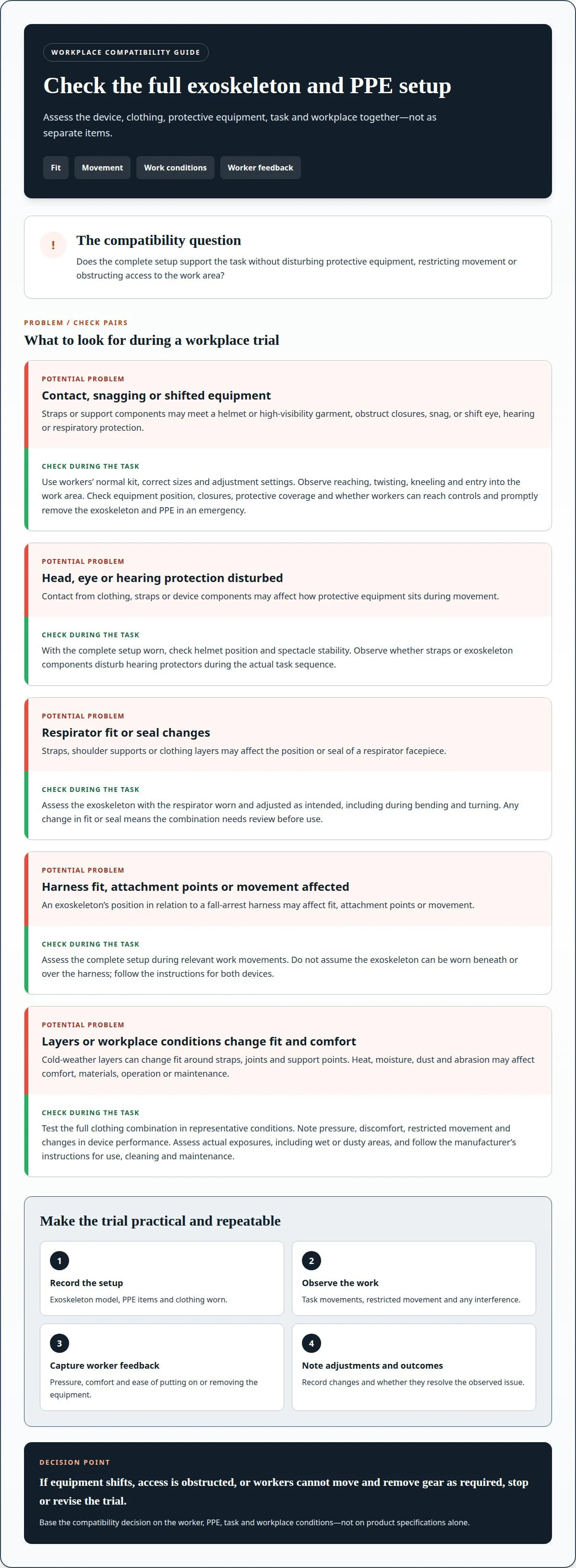
An exoskeleton can affect how workers wear PPE, move through a task or respond to changing conditions. Assess the complete setup: device, clothing, protective equipment, task and workplace. For example, a shoulder support may meet a helmet or high-visibility garment during overhead work. A waist belt may press against a harness or shift protective clothing when a worker bends.
Check fit during the movements workers actually perform, such as reaching, twisting, kneeling and entering a confined aisle. Look for straps that snag, components that obstruct closures, or contact that shifts eye, hearing or respiratory protection. Confirm that workers can reach controls and promptly remove the exoskeleton and PPE in an emergency. Interference can displace protective equipment, restrict movement or delay removal when a worker needs to exit or receive assistance.
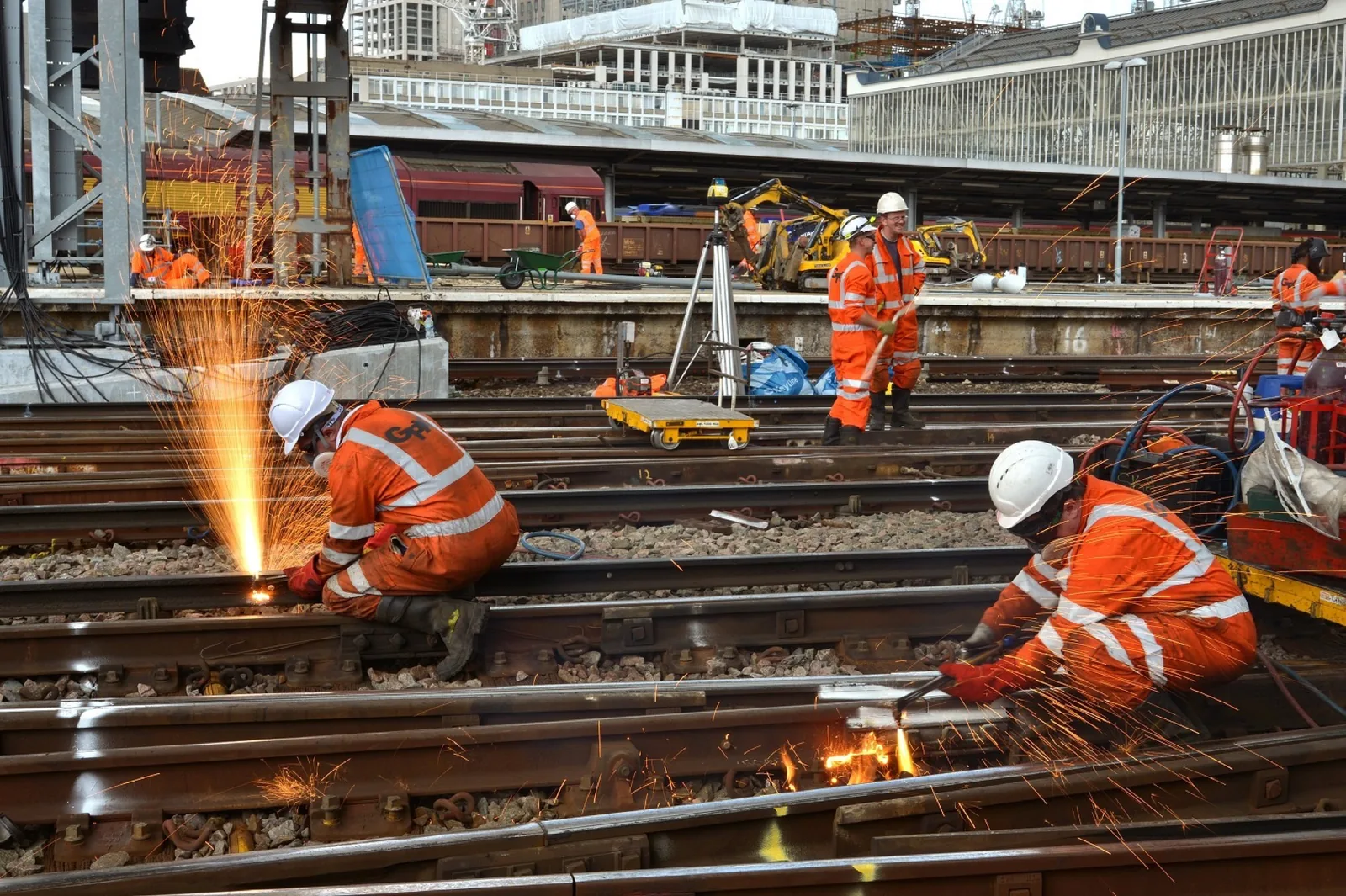
Work conditions matter too. In wet areas, moisture may affect an exoskeleton’s materials or operation; in dusty areas, particles may collect around moving parts or contact surfaces. Assess the device in actual exposure conditions and follow the manufacturer’s instructions for use, cleaning and maintenance. A trial in a dry warehouse, for example, cannot establish suitability for a wash-down area or dusty production line.
Temperature can affect comfort and usability. In a hot work zone, an exoskeleton worn over workwear may increase contact and restrict heat release. In cold conditions, layers can change the fit around straps, joints and support points. Test the full clothing combination during representative tasks, noting discomfort, pressure, restricted movement or changes in device performance. Thermal comfort is part of the assessment, not a separate convenience check.
Record conditions and observations during a pilot, including PPE combination, task, movement, exposure and any adjustments. Stop or revise the trial if equipment shifts, access is obstructed, or workers cannot move and remove gear as required. This makes compatibility a workplace decision, not a conclusion based on device specifications alone.
Safety professionals should assess whether an exoskeleton can be used in hot, cold, wet or dusty environments, and how those conditions affect its performance and maintenance. Consider whether the equipment can withstand workplace conditions such as water exposure, temperature extremes and abrasion. This adds a durability check to fit and movement: assess both what the device must withstand and how conditions may affect continued use.
A usable exoskeleton should maintain thermal comfort in the hot or cold environments workers may encounter. Consider this alongside water exposure, dust and abrasion. If the assessment identifies a concern, account for its implications for performance and maintenance before deciding the equipment is suitable. Base the checks on conditions workers may encounter during use, not only those present during initial fitting.
2. Compatibility assessment with other PPE
Assessing exoskeleton compatibility with other PPE means evaluating the complete ensemble during a pilot, not testing items separately. Start with workers’ normal kit, including the correct sizes and adjustment settings. Then observe the task sequence, such as lifting, reaching, walking and entering the work area. Note any contact, pressure, snagging or movement that changes how protective equipment sits.
Hard hats, safety glasses and hearing protection can be worn with an exoskeleton if the combined setup fits and functions properly. During task trials, check helmet position and spectacle stability, and whether straps or device components disturb hearing protectors.
Respirators need particular attention because straps, shoulder supports or clothing layers may affect facepiece position or sealing. Assess the exoskeleton with the respirator worn and adjusted as intended, including during bending and turning. Any change in fit or seal means the combination needs review before use.
Fall-arrest harnesses also require a specific compatibility assessment. Don’t assume an exoskeleton can sit beneath or over a harness without affecting fit, attachment points or movement. Observe the complete setup during relevant work movements, and follow the instructions for both devices.
Record findings from exoskeleton compatibility with other PPE checks in a consistent format, so issues can be compared across workers and tasks. For each combination, document:
- The exoskeleton model, PPE items and clothing worn.
- The task movements observed and any restricted movement or interference.
- Whether closures, straps, protective coverage or equipment positions shift.
- Worker feedback on pressure, comfort and ease of donning or removal.
- Any adjustment made and whether it resolves the observed issue.
Test the complete combination during the pilot under representative working conditions. A desk-based fit check may miss interference that appears only during repeated reaching, carrying or movement through a confined area. Record problems, adjust the combination and repeat the relevant task assessment. This makes exoskeleton compatibility with other PPE a practical decision based on the worker, PPE and job, rather than assumptions drawn from individual product descriptions.
Ready to find the right device for your operation?
3. Compatibility with cold-weather gear
Cold-weather layers change the fit and contact points between a worker and an exoskeleton. Assess the device over the clothing workers actually wear, such as an insulated jacket, thermal trousers and high-visibility outerwear. A fit established over a light base layer may not hold when thicker garments compress beneath straps or shift around support points.
Start by fitting the exoskeleton over the full cold-weather clothing combination. Check that shoulder straps, waist belts and leg supports sit securely without bunching fabric or creating pressure points. Then ask the worker to bend, reach, lift and walk through the normal task. For example, a warehouse worker reaching for chilled stock may find a jacket hem catches beneath a waist component.
Layering can also affect adjustment and donning. Gloves may make buckles or fasteners harder to operate, while a hood or raised collar may meet shoulder components during head movement. Include these details in the trial. Have workers put on and remove the equipment themselves, then note whether they can access each adjustment while wearing their usual gloves and outerwear.
Check protective coverage as well as comfort. An exoskeleton should not pull a jacket away from the body, obstruct closures or disturb other PPE worn over winter clothing. For example, observe whether a high-visibility coat rides up when the wearer squats, or whether a harness and insulated layers affect the exoskeleton’s position. Record each issue against the task and clothing combination.
- Fit: Check pressure, slippage and contact over insulated layers.
- Movement: Observe bending, overhead reaching and walking in winter footwear.
- Controls: Confirm buckles and adjustments remain usable with gloves.
- Comfort: Ask workers to report heat build-up, restricted movement or cold exposure during the task.
Assess thermal comfort in both cold stores and outdoor work. A device worn beneath a coat may alter how layers sit, while additional clothing can increase warmth during active tasks. Include normal work-rest patterns and transitions between indoor and outdoor areas in the trial, since a cold loading bay and a heated warehouse create different conditions.
Finally, assess device performance in the workplace’s actual temperature conditions and follow the manufacturer’s instructions. Note any changes in fit, movement or operation, and repeat the task after adjustments. A winter trial using the correct clothing provides a more relevant basis for selection than fitting in mild conditions.
4. Compatibility with work clothing and PPE
Workwear changes how an exoskeleton sits, moves and transfers support. Assess the device with the garments worn for the task, not over ordinary clothing. A high-visibility jacket, protective coverall or tool belt can alter strap position, cover adjustment points or create pressure where components meet the body. These interactions are central to assessing exoskeleton compatibility with other PPE in a real work setting.
No single exoskeleton model is compatible with every workplace PPE combination. Suitability depends on the device design, the worker’s clothing, the task and the protective equipment used.
High-visibility clothing and protective suits can be worn with an exoskeleton when the complete combination fits and performs as intended. During a task trial, check that outer garments still cover the required areas and closures remain usable. For chemical PPE, assess whether the exoskeleton affects the protective garment’s fit or removal. When hazardous substances are involved, follow the PPE instructions for use or safety data sheet.
Smaller items matter too. Gloves can make buckles difficult to adjust, while safety footwear can affect balance or clearance around leg supports. A tool belt may overlap a waist support or press against the body during bending. Test these combinations during normal movements, such as carrying a tool, stepping onto a platform or reaching overhead. Include these details in the overall exoskeleton compatibility with other PPE assessment.
- Clothing: Check for bunching, snagging and blocked fasteners.
- Gloves: Confirm workers can operate adjustments while wearing them.
- Footwear: Observe walking, turning and access around the task area.
- Tool belts: Check overlap, pressure and access to tools during movement.
Record the clothing and PPE combination used in each trial, then note any adjustments and their effects. If a coverall catches on a support or a tool belt shifts the device, repeat the movement after changing the setup. Keep the final assessment tied to the actual job and clothing combination. This gives procurement and HSE teams a clear basis for deciding whether the exoskeleton supports the task without interfering with protective equipment.
5. Which types of PPE must be compatible with occupational exoskeletons?
Check every item required for the task, not only equipment worn near the exoskeleton. A warehouse picking role may combine safety footwear, gloves, high-visibility clothing and a back-support device. A construction task may add a hard hat, eye protection and a fall-arrest harness. Assess the full combination workers will use.
Head, eye and hearing protection: Check that hard hats remain correctly positioned during overhead reaching. Safety glasses and face shields should stay stable when workers bend or turn. For ear defenders or hearing-protection straps, observe whether shoulder components, collars or helmet fittings disturb their placement.
Respiratory and chemical protection: Assess respirators alongside the exoskeleton and clothing. Straps or shoulder supports may affect facepiece position. Protective suits and chemical-resistant garments can also bunch beneath belts or restrict access to closures. Follow the garment’s instructions for use or relevant safety data sheet when hazardous substances are involved.
Hand and foot protection: Include the gloves and safety footwear used for the actual task. Gloves can make device fasteners harder to adjust, while footwear may affect clearance around lower-leg supports. Observe practical actions such as grasping a tool, climbing a step or walking across the work area.
Visibility and body protection: Check high-visibility jackets, protective clothing and coveralls for coverage and fit. A waist belt may pull a garment upwards, or a strap may cover a closure. Ask workers to repeat task movements and inspect clothing afterwards for displacement, snagging or restricted access.
Fall protection: Include harnesses, lanyards and other fall-protection equipment where the task requires them. Observe whether the exoskeleton changes harness positioning, access to attachment points or movement during the work sequence. Follow the manufacturers’ instructions for both the exoskeleton and fall-protection equipment.
Use a task-based inventory to make the assessment complete. Record each PPE item, the exoskeleton worn, the movement tested and any interference. Include emergency removal: workers must be able to remove equipment without a device or garment obstructing access. If the setup changes between tasks, such as adding a respirator or harness, assess that configuration separately before use.
Safety professionals should use exoskeleton vendor information to identify clothing and PPE combinations that need closer assessment, especially when workers add or change protective items. Record the equipment and clothing considered, then check the complete combination during the task movements workers perform. Vendor information can inform the assessment, but actual workplace conditions remain the basis for checking fit, movement and access. Assess each changed configuration separately rather than assuming an earlier check still applies. This keeps the compatibility review connected to the risk assessment and the PPE workers will use.
Not sure which exoskeleton fits your task? Let the Ryggo advisor match it independently.
Ryggo
Ryggo helps businesses move from a compatibility checklist to a practical device decision. Its vendor-neutral matching, device comparisons and ROI calculations connect the exoskeleton to the task, workforce and workplace. This is useful when PPE, clothing or operating conditions narrow the options in logistics, manufacturing, construction, retail, healthcare and other sectors.
AI-powered recommendations help identify devices suited to the work, while vendor-neutral comparison supports a clear procurement decision. Recommendations are based on fit across vendors, not paid listings or sponsorship. Ryggo earns from orders placed through its service, at rates that do not depend on a device’s ranking. This keeps the selection focused on operational requirements, including the PPE combinations assessed during a trial.
Deploy & Decide gives companies the opportunity to try an exoskeleton before purchase. Trial lengths are 2, 4 or 8 weeks. The test fee is invoiced before the trial, and the balance is invoiced after the trial if the devices are not returned.
Use a trial to assess the setup in the real task, with usual work clothing and PPE. For example, a warehouse team can observe how a device fits with high-visibility clothing and safety footwear during picking. A hospital or clinic can assess whether a suitable device fits care tasks and clothing requirements through Ryggo’s healthcare exoskeleton matching. The trial gives workers and decision-makers a practical basis for judging fit, comfort and task suitability.
Ryggo also provides vendor-neutral device comparisons and ROI calculations to help procurement teams weigh operational fit alongside investment. For a warehouse, factory or healthcare setting, the process runs from task requirements to a real-world device trial, with the option to purchase if the trial supports that decision.
Contact Ryggo to explore a suitable next step for your workplace.
Frequently Asked Questions
How should employers assess and test exoskeleton-PPE compatibility before deployment?
Assess the complete setup against the task, then document the decision before deployment. Include workers who perform the task and record the equipment configuration, adjustments, observed limitations and any agreed restrictions. Check whether different body sizes or work methods change the fit. If the role has distinct task types, such as picking and replenishment, assess each separately. Use the findings to define which combinations are approved for workplace use.
Find the right device before you trial anything
The Ryggo advisor maps your task, environment, and requirements to compatible devices — independently, across the full European market.