Key takeaways
- Compare physical effort and operational performance during the same task, with and without the exoskeleton, so changes have useful context.
- Assess comfort, fit and ease of use during real work; worker willingness can determine whether a device is practical beyond a brief trial.
- Track actual use alongside non-use, and record the reasons workers leave the device off to identify barriers that performance measures alone can miss.
- Look beyond task output: assess movement and muscle activity, and observe whether the device responds appropriately as tasks and postures change.
- Use a vendor-independent comparison and a Deploy & Decide trial to evaluate device fit before making a purchasing decision.
Table of Contents
- Physical, operational and acceptance metrics
- User willingness to use the exoskeleton
- Adherence, non-use and maintenance
- Biomechanical performance
- Control responsiveness and adaptability
- How Ryggo helps with the decision
Physical, operational and acceptance metrics
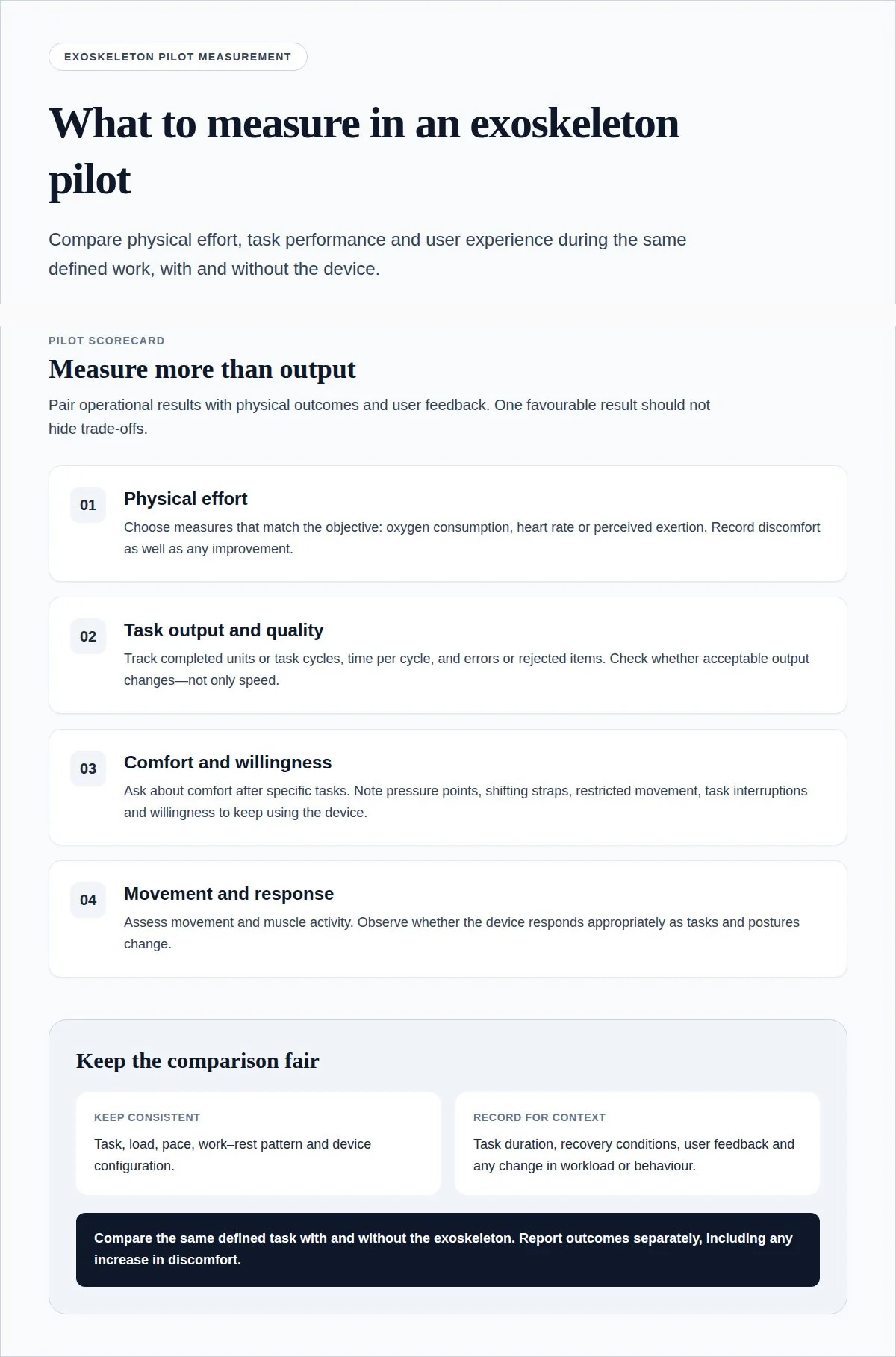
Measure physical effort, task output and user acceptance against the same defined work, with and without the exoskeleton. The key metrics for an exoskeleton pilot should connect physical outcomes to operational performance, rather than treating one favourable result as proof that the device fits the workplace.
Heart rate and physiological strain
Heart rate and perceived exertion indicate the physical demand placed on a worker during a task. They matter because a device can change effort even when walking speed or output stays similar.
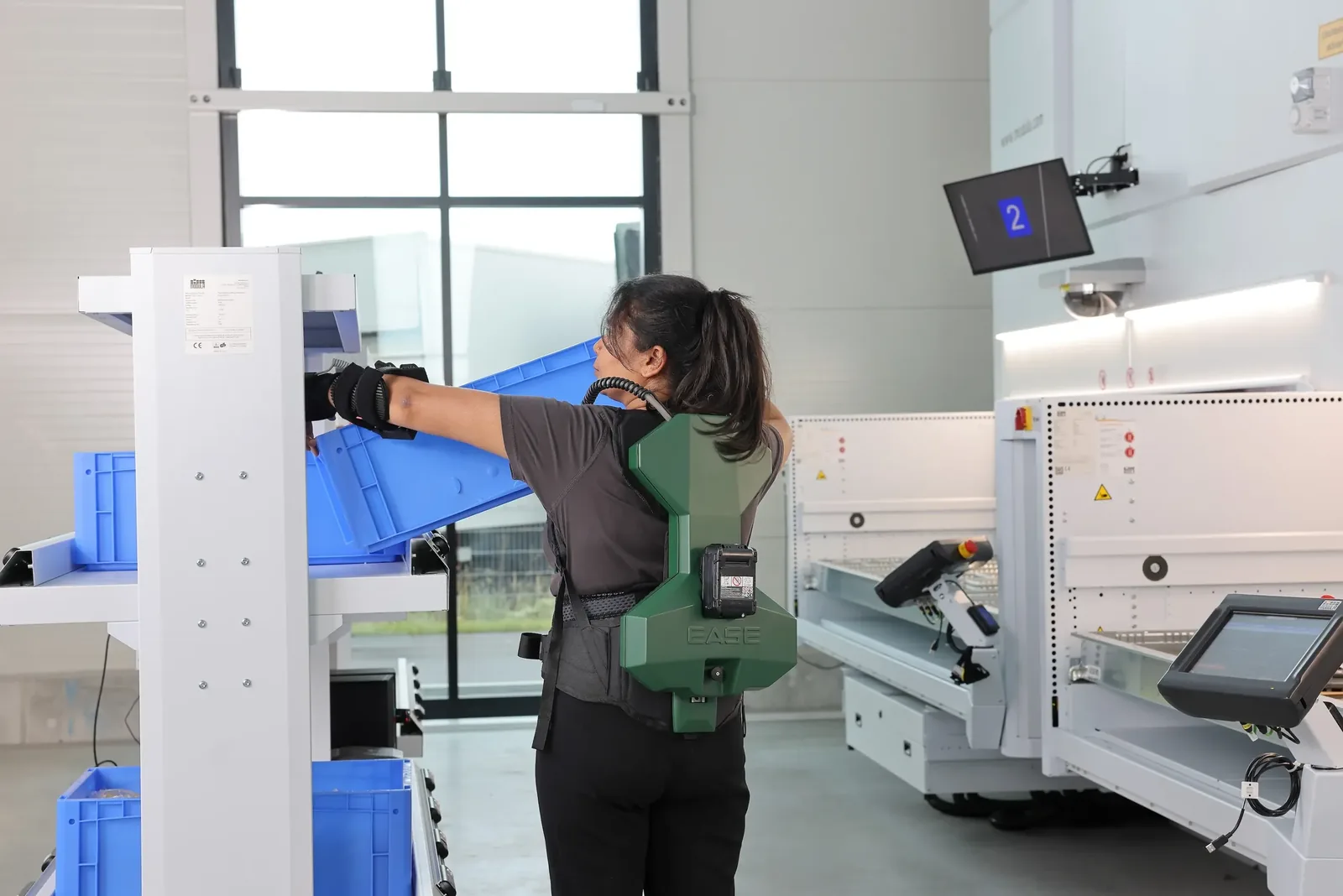
Record heart rate during comparable work periods, alongside task, pace and recovery conditions.
Add a brief worker journal after each evaluation period. Record perceived effort, discomfort, task interruptions and the work being done. For example, a worker may report easier lifting but increased pressure at a contact point. That detail helps explain physiological readings and reveals trade-offs an average can conceal.
Physiological objectives
Define the physical demands the pilot is designed to assess. Oxygen consumption, heart rate and perceived exertion describe different aspects of effort, so choose measures that match the objective.
Set the objective before collecting data: assess overall energy demand, cardiovascular response, or perceived exertion during a specified task.
Keep evaluation conditions consistent. For each comparison, record task duration, load, walking pace, work-rest pattern and device configuration. If the objective is to reduce effort during repeated handling, assess the same handling sequence rather than mixing it with walking or a different load. Report each outcome separately, including any increase in discomfort.
Task productivity and quality
Productivity measures how much acceptable work a person completes within a defined task period. Task time captures duration, while quality shows whether output meets the same standard. Together, these measures reveal whether an exoskeleton changes work without hiding defects or rework.
Measure completed units per shift or task cycle, elapsed time per cycle, and errors or rejected items. Compare the same task, quality criteria and operating conditions with and without the device. This answers the practical question: did workers complete more acceptable work, maintain a similar pace or slow down?
Pair output data with acceptance measures, such as comfort, perceived effort and willingness to continue using the device. A faster cycle is not a successful outcome if quality falls or workers avoid the equipment.
User willingness to use the exoskeleton
Willingness to use an exoskeleton depends on fit, training and comfort during the actual task. Assess these alongside performance: a device workers avoid cannot provide consistent support at work.
User Fit and Training
Representative user fit means assessing the device with workers who reflect the roles, body sizes and tasks involved. It matters because fit can change across users and during movement, affecting both usability and the evaluation.
Assess fit in standardised postures and through functional movement, such as reaching, bending or walking. ASTM F3661-24 distinguishes these two aspects of fit. Include workers who perform the task regularly, rather than relying only on a confident volunteer or a supervisor’s assessment.
Training also needs evaluation. ASTM F3444/F3444M-20 describes minimum training requirements and recommends a demonstration followed by the user repeating the task. Record whether each worker can put on, adjust and use the device correctly after instruction. A training gap can look like poor device fit unless the pilot records both.
Compare results against a baseline using the same worker under different conditions. ASTM F3518 recommends repeated-measures designs that assess the same user across conditions or at multiple times.
Before deployment, define the task, users, baseline, training, measures and review points. Then observe work under the planned conditions and record changes or problems as they occur.
Comfort and Ergonomics
A comfort and ergonomics assessment records how the device feels and interacts with the user during work. This matters because discomfort, pressure or restricted movement can reduce willingness to use a device that otherwise suits the task.
Ask users to describe comfort after specific tasks, not only at the end of a shift. Record where pressure occurs, whether straps shift, and whether the device interferes with tools or clothing. ASTM F3688-25 addresses potential ergonomic risks, including force, awkward posture, repetition and contact pressure.
Use a consistent assessment form so comments can be compared across workers and tasks. A structured form can complement short interviews, while an example such as discomfort during repeated overhead reaching points to a task-specific fit issue.
ROI should compare operational value, such as acceptable output or task time, with the costs of acquiring and using the device. Include training, deployment and maintenance inputs. Do not count productivity gains that coincide with lower quality or reduced use. Show the assumptions alongside the result so decision-makers can see what drives it.
Adherence, non-use and maintenance
Record whether workers use the device as planned, when they leave it off, and whether maintenance interrupts work. These measures show whether trial outcomes reflect regular use or occasional participation.
Adherence and non-use
Adherence measures how consistently workers use an exoskeleton during eligible tasks; non-use records when and why they do not. Both matter: reported benefits cannot represent routine work if the device is often set aside.
Track use against planned task opportunities, not just whether the device was worn that day. A simple shift log can note the task, start and stop times, periods of use, and reasons for interruptions. For example, a worker may remove a back-support device for a task involving close contact with equipment. Record this as a task-specific barrier, not simply poor compliance.
Separate voluntary non-use from operational causes, such as a device being unavailable or a task changing. Tracking duration and context helps interpret outcomes.
Review the log with workers and supervisors at regular evaluation points. Look for recurring reasons, such as discomfort during a particular movement, difficulty changing tasks or delays during setup. If use falls during one task, examine its demands before drawing conclusions about acceptance across the operation.
Maintenance and pilot costs
Maintenance tracking records device faults, adjustments, service needs and resulting downtime. It matters because an exoskeleton’s practical value depends on availability, not just performance when the device works correctly.
Keep a record for each device, noting the date, task, issue, action taken and time out of service. A loose strap that needs adjustment, for example, differs from a fault that prevents use. Record both, then assess whether recurring issues disrupt work or change how workers use the device.
Pilot costs depend on the device, trial duration, training needs and maintenance arrangements. Keep these inputs separate from operational outcomes, so decision-makers can see what drives the business case. A vendor-independent device comparison can help structure that evaluation without treating purchase price as the only measure.
At the end of the trial, review use logs, downtime and service records together. If non-use follows recurring maintenance interruptions, the issue differs from workers choosing not to wear an available device. That distinction helps determine whether to adjust implementation, evaluate another device or stop the pilot.
Ready to find the right device for your operation?
Biomechanical performance
Biomechanical performance shows how an exoskeleton changes movement and muscle demand during a defined task. It helps determine whether mechanical assistance supports the intended activity and whether physical demand shifts elsewhere.
For repetitive work, compare movement and muscle activity under consistent task conditions. Electromyography, or EMG, records muscle activity. This provides a task-specific view beyond output or perceived exertion.
Compare the same task with and without assistance, and report each muscle group separately. The task, user, device fit and operating conditions all shape the measured response.
Before collecting biomechanical data, define the movement or muscle demand the device is intended to support. For repeated tool use, this might mean assessing forearm muscle activity. For another task, choose measures that reflect its physical demands. Avoid averaging different tasks together: assistance during one movement may conceal increased demand during another.
Interpret muscle readings alongside task observations. Record posture, repetition, force demands and contact points during the activity. A lower signal in one muscle does not, by itself, show that total physical demand has fallen. The exoskeleton may shift load to another body area or affect stability, so note any new discomfort or movement restriction during the same task.
Engineering decisions need comparable records. Document device configuration, adjustments, task conditions and measurement methods for each evaluation. If a setting changes between sessions, record it and avoid treating the results as directly equivalent. This helps identify whether a measured reduction reflects device assistance or a change in task setup.
Report findings in a clear sequence: state the target movement, identify the muscles measured, describe the comparison conditions, then report the observed response and any trade-offs. Pair objective EMG findings with worker feedback on exertion and movement. Together, these measures show whether assistance supports the intended biomechanical outcome during actual work, rather than merely changing a laboratory signal.
Control responsiveness and adaptability
Control responsiveness describes how well an exoskeleton’s assistance matches a user’s movement and task demands. Assess it because delayed, unexpected or poorly matched support can disrupt work.
Observe the device during defined movements, such as reaching, lifting, lowering and changing direction. Record whether assistance begins when needed, continues through the movement and eases as the task changes. Note hesitation, resistance, unexpected support or any need for the worker to pause and adjust.
Adaptability concerns how consistently the device remains usable as task conditions vary. A warehouse worker might alternate between lifting at different heights, walking and handling objects. A factory role might involve repeated tool use followed by repositioning. Assess each relevant transition rather than judging responsiveness during one isolated movement.
Use a consistent observation record for each participant. Include the task, movement, device setting, user feedback and any interruption. Describe events plainly, for example: “assistance continued after the worker changed direction.” This gives evaluators a specific behaviour to review without assuming the cause or imposing an unsupported response-time threshold.
Separate control issues from other factors. Fatigue, unfamiliarity, fit and changing work pace can affect how a participant moves or experiences assistance. Record whether an issue occurs early or later in a session and whether it appears during a particular task. Compare like conditions before attributing a change to control behaviour.
Review muscle activity and worker feedback together when both are available. A change in perceived effort may accompany a mechanical response, but it does not explain that response on its own. Note whether the user reports support arriving too soon, too late or at an uncomfortable level, then compare the report with observed movement and task completion.
Configuration records help make the evaluation interpretable. ASTM F3576-22 addresses recording exoskeleton test configurations, including hardware and software configuration and adjustment parameters. ASTM F3427-25 provides a structure for documenting environmental conditions relevant to testing. Record relevant settings and surroundings so later observations can be linked to the conditions under which they occurred.
For a practical review, group findings by task transition, user feedback, interruption and observed movement. Distinguish recurring patterns from one-off events, and identify whether they affect work quality, pace or willingness to continue. This turns “the device felt unresponsive” into an observation that can be tested in follow-up.
Use a vendor-independent exoskeleton comparison to frame device selection around task fit and pilot observations.
Not sure which exoskeleton fits your task? Let the Ryggo advisor match it independently.
How Ryggo helps with the decision
Ryggo, Europe’s first independent exoskeleton exchange, helps organisations turn pilot findings into a clearer device decision. Its recommendation, vendor-neutral comparisons and ROI calculations help connect the task, user needs and operational evidence to device selection. For teams that need to assess real-world fit before purchasing, the Deploy & Decide trial programme provides a practical next step.
Consider this support when results suggest a potential fit but leave questions about which device to evaluate or how its operational value compares. A structured comparison helps decision-makers weigh physical outcomes alongside use, task performance and cost assumptions.
If you’re deciding what to do next with your pilot, contact Ryggo to discuss your requirements.
Turn pilot findings into a clear decision
Before the next evaluation, agree how the organisation will act on mixed results. A device may support one task but feel awkward during another, or improve a physical measure without fitting the wider workflow. Decide which outcomes are essential, which trade-offs are acceptable and who will make the final decision. This turns the key metrics for an exoskeleton pilot into decision criteria, not just a collection of observations.
Keep conclusions tied to the work studied. A result from one task or group of users should guide decisions for that context, not become a blanket assumption across a warehouse, factory or healthcare setting. If evidence is incomplete, decide whether to refine the evaluation, consider another device or pause adoption. Each is a valid outcome when it follows from the findings.
To connect pilot evidence with device selection, discuss your next evaluation with Ryggo. A measured decision provides a stronger basis for supporting workplace ergonomics.
Frequently asked questions
What are the key success metrics for an industrial exoskeleton pilot?
Success metrics should show whether the device fits the task, remains usable and supports the intended operational or ergonomic objective. Combine worker feedback and task outcomes with records of interruptions, discomfort and equipment issues. Before the pilot, define which findings would justify continuing, changing the task scope or stopping. A device, for example, may be unsuitable for one task even if workers find it comfortable elsewhere.
How do you measure exoskeleton effects on worker fatigue, exertion, and muscle activity?
Assess fatigue and exertion through consistent worker reports, then compare them with physiological or biomechanical measures where available. Collect feedback after comparable work periods and note whether fatigue changes across the shift. Electromyography can assess muscle activity during the task of interest. Interpret observations together: a lower muscle signal alone does not establish that overall effort or fatigue has fallen.
What safety and ergonomic risks should an exoskeleton pilot track?
Track discomfort or skin irritation, thermal strain, joint effects, stability concerns and battery-related issues. Workplace exoskeletons may shift physical load rather than eliminate it, so assess where demand moves as well as where assistance is applied. Include task-specific observations, such as whether the device restricts movement, changes balance or creates contact pressure during work.
How do you measure worker comfort, usability, and adoption of exoskeletons?
Gather brief, consistent feedback after specific tasks, and observe how workers put on, adjust and operate the device. Ask what made use easier or harder, including interference with clothing, tools or task changes. Record whether workers choose to use the device during eligible work and why they decline. Private feedback can surface concerns that might not arise in a group discussion.
What is a typical exoskeleton pilot duration and sample size?
There is no universal target for duration or sample size. Both depend on how varied the tasks are and how many workers perform them, so define them before the pilot starts and record them with the results.
Find the right device before you trial anything
The Ryggo advisor maps your task, environment, and requirements to compatible devices — independently, across the full European market.