What the device does and does not do
In the occupational field, most devices support either the shoulder during overhead work or the back during bent-forward postures and lifting, according to a review of a semi-active overhead device. This guide stays with industrial shoulder exoskeletons for overhead work. Medical, rehabilitation and consumer devices follow different rules and serve different purposes, so they are out of scope.
Before comparing designs, be clear about what the device can and cannot do. It does not remove the work. It redistributes effort, and depending on the design it may push some of that load elsewhere, into the back or the hips for example. That is one reason a trial in your own setting matters. The sections below cover the main design types, what the research supports, how to match a device to your task and how EU classification affects a purchase.
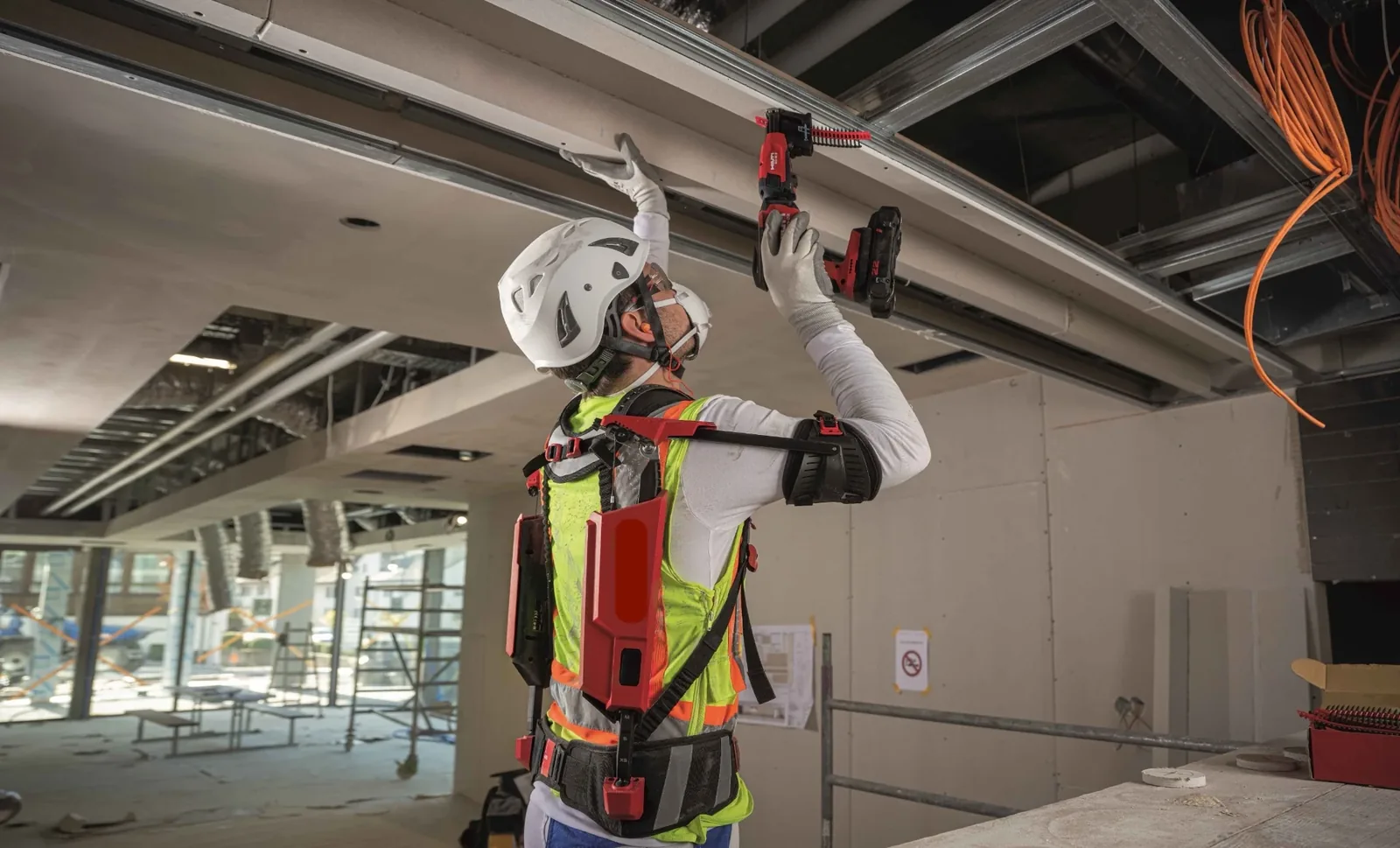
Passive, semi-active and active designs compared
Occupational exoskeletons are generally classed as passive, active or semi-active. The difference is where the support energy comes from, and it shapes weight, cost, complexity and how the device feels in use.
Passive designs store energy in springs or dampers, drawing it from the user's own movement. They are lighter and cheaper than active alternatives, and generally simple and intuitive to use. They suit repetitive overhead tasks where you want a robust shoulder exoskeleton for overhead work with little to maintain. The trade-off, as the same review notes, is that a passive device provides a permanent upward support torque, so the wearer works against the system whenever the arms move downwards. On tasks that alternate between overhead and low positions, that can be noticeable.
Semi-active designs use a small motor only to adjust a spring's preload or lever arm. The support principle stays passive, but the level of support can change. The aim is to reduce the "working against it" effect on downward movements.
Active designs use actuators such as electric motors or pneumatics. In principle they can offer more adjustable support, but they add weight, complexity, power management and, as discussed below, different regulatory considerations. Some pneumatic shoulder devices exist in the commercial range, such as the exoIQ S700.
For most overhead tasks today, the practical choice is between passive devices, such as the Skelex 360 or Skelex Edge, and a smaller set of active or semi-active options.
Ready to find the right device for your operation?
What the evidence shows and where it stops
The laboratory evidence for passive shoulder support is encouraging, but it needs careful reading. Reported reductions in anterior deltoid activity during overhead work range from 24% to 80% across studies, as set out in research on a passive upper limb exoskeleton. A range that wide means no single figure tells you what you will see on your own site. Devices, test postures, participants and measurement methods all differ.
Three findings are worth keeping in mind when you evaluate a shoulder exoskeleton for overhead work:
- Support depends on posture. One study of a passive shoulder device found it gave support beyond strictly overhead postures, but only where the shoulder was abducted, meaning the arm raised out to the side. Outside those postures the benefit was smaller. The same paper reports a trade-off between the amount of support and how the wearer perceives the device.
- Load can shift. The same research flags possible extra back-muscle activity during overhead work. Check for discomfort elsewhere in the body, not only the shoulder.
- Lower muscle load is not the same as lower perceived effort. In a fatigue study, passive shoulder support partly mitigated fatigue-related effects, yet the perceived workload of overhead work did not change. Workers may not "feel" a benefit that measurements detect, which affects adoption.
It is just as important to be clear about what is not established. Most of this evidence comes from controlled lab studies, not long-term field use, so lab percentages should not be read as workplace results. Dedicated research on specific tasks, ceiling drilling in particular, is thin. Treat device selection as a reasoned, task-by-task process, and verify it with a structured trial instead of relying on published figures alone.
Matching the device to the overhead task
Evidence for individual tasks is limited, so the most reliable approach is to analyse the work itself and match the device to what it demands. Four questions do most of the work.
What postures dominate? Note the arm height, how far it is raised to the side versus the front, and how long it is held. Some passive devices deliver their support mainly when the shoulder is abducted. A task done mostly with arms in front of the body may therefore suit a different design than one with arms raised sideways.
How static or dynamic is the task? Holding a tool against a ceiling for minutes is a sustained, static load. Fast cycles that move between overhead and low positions mean frequent downward movements, where a passive device's constant upward torque can get in the way. In that case a design with adjustable support, or one that stays out of the way when the arm is lowered, deserves a closer look.
What do the arms carry? Heavy tools such as rotary hammers change the load profile compared with light fastening or inspection work. Check the support range against the real tool weight, and confirm the device does not restrict the reach or tool angles your task needs.
What else is the worker wearing and doing? Harnesses, hard hats, tool belts and work at height all interact with a shoulder frame. Climbing ladders, kneeling or crawling under equipment can rule out bulkier designs.
If you lack structured task data, a short workplace video can help. Ryggo offers a free ergonomic analysis that scores postures from a video clip, and its Exoskeleton Advisor recommends back or shoulder devices based on your operation. Both are starting points for narrowing the choice, not substitutes for trying a device on the actual task. You can browse the full range on the exoskeletons page.
Not sure which exoskeleton fits your task? Let the Ryggo advisor match it independently.
Understanding EU rules for shoulder devices
Europe has no single regime for exoskeletons. As the Federation of the European Ergonomics Societies explains, the rules that apply depend on the intended use and how the device is built.
- Machinery rules can apply where the exoskeleton has a drive system other than human effort, which is the case for active devices with motors, compressors or similar actuators.
- Personal protective equipment (PPE) rules can apply where the device is intended to protect against health and safety risks.
- Medical device rules apply where the purpose is diagnostic or therapeutic, which places rehabilitation devices in a separate category from the industrial products discussed here.
For a buyer, the practical consequence is that two shoulder devices that look similar may sit under different compliance frameworks, depending on how they are powered and how the manufacturer defines their purpose. A passive spring-based device and a powered pneumatic one are not necessarily treated the same way. Where CE marking and documentation differ, so do the declarations of conformity you should expect to receive.
When you evaluate a device:
- Ask the vendor which legal framework the product was assessed under and request the corresponding declaration of conformity.
- Confirm that the stated intended use matches your application, because the intended use drives the classification.
- Involve your health and safety and legal teams early, particularly if you plan to deploy across several countries.
- Check the current official texts instead of relying on summaries when you finalise a purchase.
This is orientation, not legal advice. Your own compliance team should confirm the position for your specific product and use.
Testing a shoulder exoskeleton in your own workplace
Everything above points the same way. Published figures can narrow your shortlist, but only your own workers, tools and tasks show whether a device fits. Comfort, range of movement, interaction with protective equipment and the shifting of load to other body areas only emerge in real use. Lower muscle load does not always translate into perceived relief, so worker feedback matters as much as any measurement.
Ryggo's Deploy & Decide programme is built around this. Listed devices can be trialled in your own workplace for 2, 4 or 8 weeks, with a test fee. You can read how it works in the step-by-step overview, the guide to try-before-you-buy programmes and the article on the cost of exoskeleton trials. Current terms are on the pricing page.
To get a useful result, plan the trial:
- Define the task and the people. Choose a representative overhead task and a small group of workers with different body sizes and experience levels.
- Agree what you will measure. Combine worker-reported comfort and perceived effort with practical indicators such as task completion, posture observations and any discomfort in the back, neck or hips.
- Allow time to adapt. A first-day impression rarely reflects real use, so build in an adjustment period before judging.
- Capture the business case. Link trial findings to your costs using the payback period guide.
In short: start from the task and posture, shortlist designs whose support suits it, confirm the regulatory framework with the vendor, and decide only after a trial in your own conditions. That sequence keeps the choice grounded in your operation, not in laboratory averages.
Find the right device before you trial anything
The Ryggo advisor maps your task, environment, and requirements to compatible devices — independently, across the full European market.