Key Takeaways
- Exoskeletons may support surgeons during prolonged static postures, but they are not a substitute for skilled clinical staff.
- Match the support type to the task: back, shoulder and arm support address different physical demands.
- Assess more than comfort. Check whether the device fits surgical movements, visibility, hygiene routines and team workflow.
- Compare costs in context, including the device’s fit for the procedure and the practical demands of introducing it.
- Use a trial to evaluate ergonomic fit in the real working environment before deciding whether to purchase.
Table of Contents
- Exoskeletons in the operating room - a solution to the shortage of skilled workers?
- Which exoskeletons are currently used in surgery?
- Exoskeleton use for prolonged static postures
- Operating-room workflow, hygiene, and device acceptance
- How much do exoskeletons for surgeons cost?
- Ryggo: Trial programmes for exoskeletons (called Deploy & Decide)
Exoskeletons in the operating room - a solution to the shortage of skilled workers?
Passive and powered exoskeletons provide physical support through different mechanisms. Neither replaces experienced surgeons or solves staffing shortages, but either may help address the physical demands of a procedure.
Ergonomic Support for Theatre Staff
Support can target the back, shoulders or arms, depending on the posture and task. Four universities tested a passive upper-body exoskeleton designed to support surgical assistants wearing lead aprons. For surgeons, assess whether support eases a sustained posture without limiting mobility or precision. Include nurses and assistants, whose tasks and movements may differ.
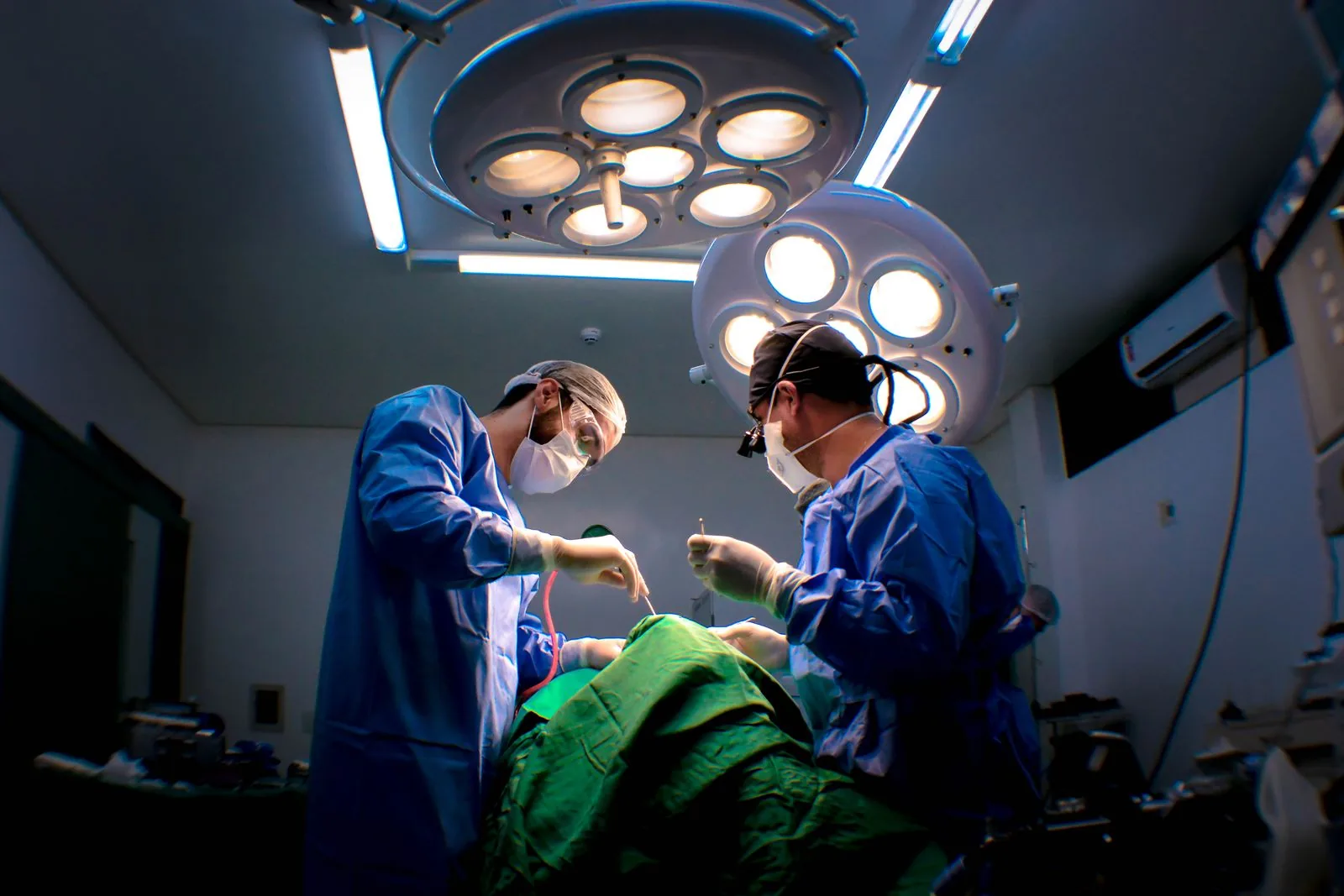
Some surgeons reported minor difficulty positioning headlights and magnification glasses while wearing a support device. This shows that fit is a workflow issue as well as a comfort consideration. During an assessment, have the wearer perform representative movements, such as reaching across the operating table and adjusting visual aids. Record where the device provides support and where it gets in the way.
Device Comparisons and Cost
Passive designs use mechanical support and usually don’t require charging. Powered designs use motors and a power source to assist movement. Their suitability for an operating room depends on the task, required mobility and fit around clinical equipment. Compare the support provided with the practical demands of the procedure rather than assuming one design is always preferable.
IX Shoulder Air is an example of an adjustable shoulder-support option. Assess whether its adjustability suits the wearer’s posture and task. Archelis is designed to support prolonged standing, so consider whether its form and movement assistance match the surgeon’s position during a procedure. These examples address different needs, not every operating room with one solution.
Device cost depends on the model, support system and purchasing scope; the price is given after a quote request. Compare costs against the intended use, wearer fit and practical requirements for introduction. A device that adds support but complicates movement or visual adjustments may be a poor operational fit. Include the time and process needed to assess usability alongside the purchase decision.
To assess value for the workforce, separate the staffing question from the ergonomic one. An exoskeleton can’t create clinical capacity or replace surgical expertise. It may support experienced staff during physically demanding work, but its value depends on whether it suits actual tasks without adding friction. During a trial, observe posture, movement, precision and equipment adjustments, then gather feedback from surgeons and theatre staff. Use that evidence to decide whether support is appropriate for a particular role.
Which exoskeletons are currently used in surgery?
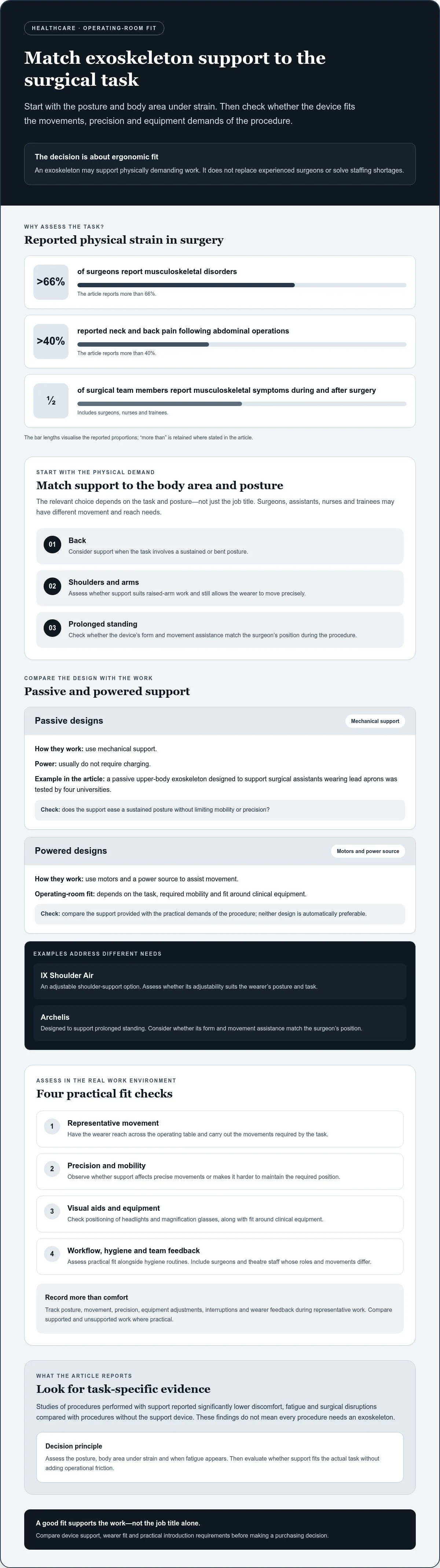
Surgical exoskeletons can support the back, shoulders or arms during demanding procedures. The relevant choice depends on posture and task, not just job title. A device may help maintain a sustained position while leaving the hands free for precise work. This matters during minimally invasive procedures, where small, controlled movements remain central. Assess the support needed for each role rather than assuming everyone in the theatre team has the same physical demands.
The physical demands are substantial. More than 66% of surgeons report experiencing musculoskeletal disorders. More than 40% reported neck and back pain following abdominal operations. These figures point to a practical assessment: identify where strain builds during a procedure, then match support to that body area. For example, note whether a surgeon holds the neck forward, maintains a bent posture, or keeps the arms raised for extended periods.
Prolonged standing can add fatigue to sustained neck, back or arm postures. Half of surgical team members, including surgeons, nurses and trainees, report musculoskeletal symptoms during and after surgery. Fatigue may make it harder to maintain a stable posture and consistent precision, so assess each role rather than assuming one device suits everyone. Assistants and trainees may have different reach, positioning and movement needs from the lead surgeon.
Studies of procedures performed with support point to potential ergonomic benefits. Compared with procedures without the support device, supported procedures showed significantly lower discomfort, fatigue and surgical disruptions. The authors concluded that the device may help reduce skeletal symptoms caused by intraoperative positioning. Support may also help surgeons maintain precision during minimally invasive work and assist hand movements in tasks requiring precision.
These findings don’t mean every procedure needs an exoskeleton. Start by mapping the task: note the posture held, the body area under strain and when fatigue appears. Then assess whether support changes movement, concentration or precision during representative surgical work. Include theatre staff who assist with the procedure, since their postures and demands may differ from the surgeon’s. Track observations consistently throughout the task, not just at the start.
A useful comparison captures more than immediate comfort. Record the wearer’s feedback, interruptions, posture and ability to perform precise movements. The same surgeons performed four procedures without support for comparison, showing why it can be useful to assess supported and unsupported work rather than rely on first impressions. This approach helps determine whether a device supports the task without adding operational friction and whether its benefits apply to that procedure.
Exoskeleton use for prolonged static postures
During a long operation, holding one posture can put strain on the back, shoulders and arms. At St Mark’s National Bowel Hospital, a colorectal surgeon performed a seven-hour procedure while wearing an exoskeleton. The example shows why teams should assess support during sustained clinical work, not just in brief demonstrations.
Postural risk analyses can help identify where strain concentrates before selecting a device. One in three postural analyses shows high postural risks for the back, at 37%. One in four shows high risks for the shoulders and elbows, at 24%. These figures help focus an assessment, but each hospital should examine the tasks and postures of its own surgical team.
Start with the work itself. Record the posture held during a procedure, the body area under strain and whether the wearer can move freely as the task changes. Then match the device’s support to that pattern. For example, a device designed to support the upper body may be less suitable if the main demand is prolonged standing or sustained arm positioning.
AI-based ergonomic posture analysis can screen recorded work and flag postures for closer review. A short workplace video can produce an automated RULA-based screening estimate. This is not a certified assessment and does not replace professional ergonomic consultancy. Use it to identify tasks that may need fuller assessment, not as a clinical conclusion.
Online assessment is most useful when it reflects actual working conditions. Record a representative task, including the working position and relevant movements, rather than an isolated pose. For a hospital team, this might mean assessing how a surgeon leans, reaches or holds their arms during a typical procedure. The aim is to identify where a device could support posture without obstructing movement around the patient.
Use the findings to define trial criteria before selecting equipment. Note the posture or body area the device should support, then observe whether it remains comfortable and workable throughout the task. Include wearer feedback, mobility and any adjustments needed during the procedure. This makes comparisons more consistent across devices and users.
Postural analysis can also help distinguish a device mismatch from a task mismatch. If the support does not address the main posture, a different type of device may be needed. If posture varies across procedures, assess each relevant task separately. Hospitals can then base their decision on observed demands rather than assuming one exoskeleton suits every surgeon or procedure.
Ready to find the right device for your operation?
Find your exoskeleton →Operating-room workflow, hygiene, and device acceptance
Risks include restricted movement, workflow interruptions and poor fit with cleaning routines. Assess these issues through simulated and representative tasks before adopting a device.
Workflow and Hygiene Considerations
A 10-minute simulated surgical task gave team members a way to assess a commercial upper-body exoskeleton during work-like movements. The practical check is whether the wearer can perform required actions without changing established routines. Observe reaching, posture changes and movement around the operating table, then record any interruptions or adjustments.
Hygiene needs equal attention. A machine-washable design that can also be wiped down may simplify cleaning between uses. Confirm that the device’s cleaning method fits the hospital’s routine, and establish who handles it before and after procedures. A Mayo Clinic pilot found the device compatible with operating-room requirements in almost all procedures.
Device Acceptance, Risks, and Limitations
Acceptance depends on whether staff experience useful relief without losing mobility or concentration. Fourteen surgical team members took part in focus groups and usability testing. Their mean System Usability Scale score was 81.3 out of 100, with a standard deviation of 8.1 points. Treat usability as one decision input, alongside task fit and workflow observations.
Exoskeletons can feel restrictive when their support doesn’t match the wearer’s posture or movements. A device may also add steps to gowning, cleaning or equipment handling. Ask surgeons and theatre staff to describe specific problems during use instead of relying only on a general comfort rating.
Structure the evaluation around actual operating-room tasks. Before a trial, agree which movements and routines must remain unaffected, such as reaching across the table or changing position. During use, note interruptions, adjustments and each wearer’s feedback. This helps distinguish initial unfamiliarity from a recurring obstacle to everyday work.
Usability results should be interpreted in context. The 81.3-point average reflects participants’ evaluation of a simulated task, not every procedure or hospital. Compare feedback from different roles, since surgeons, assistants and other theatre workers perform different movements. A device accepted by one user may not suit another person’s posture or duties.
Assess hygiene across the full use cycle. Review how the device is cleaned, stored and prepared for the next wearer, then consider whether those steps fit existing routines. A wipe-down option may support cleaning, while machine-washable components may need separate handling. The test is operational fit, not a feature in isolation.
Make the decision using combined evidence: observed movement, staff feedback, cleaning practicality and workflow impact. The Mayo Clinic pilot’s compatibility finding supports evaluation in clinical settings, but local routines still matter. A structured trial can show whether the device provides practical relief without creating new barriers for the surgical team.
How much do exoskeletons for surgeons cost?
There isn’t one price for every surgical exoskeleton. The price depends on the case and is given after a quote request. The model, support type and intended use all shape the comparison. A passive shoulder-support device and a powered system are different purchasing options, so their prices shouldn’t be treated as interchangeable.
Start by defining the task the device must support. For example, a hospital assessing assistance for prolonged standing has different requirements from one evaluating sustained arm positioning. Those requirements affect which types of device belong in the comparison. A shortlist based on the actual posture is more useful than comparing products designed for different purposes.
Next, compare the purchase scope. Assess what the quoted device includes and whether the proposed configuration suits the wearer and procedure. Check fit, adjustment needs and compatibility with expected movements. A device that requires changes to clinical routines may have operational implications beyond its purchase price.
Consider the wider decision alongside the initial purchase cost. Assess how often the device is expected to be used, which roles may wear it and whether its support addresses a recurring task. For instance, a device intended for a specific procedure should be assessed for that procedure, not assumed to suit the entire theatre team. These factors help buyers judge relevance, not just the headline price.
A practical comparison can use a consistent set of questions:
- Which posture or body area does the device support?
- Does the wearer need adjustable support for the task?
- Can the surgeon perform required movements without disruption?
- How will cleaning and everyday handling fit the hospital routine?
- What evidence from a trial would support a purchase decision?
Use the same questions for each option. This keeps the comparison focused on clinical use rather than features that don’t address the hospital’s main ergonomic need. Record staff feedback and workflow effects alongside the quoted price. A lower purchase cost alone doesn’t establish suitability if the device doesn’t match the task.
For a return-on-investment assessment, define the expected benefit before calculating it. For example, identify the work pattern the device aims to support, who would use it and which operational outcomes the hospital will measure. Don’t assume reduced strain automatically creates financial savings. Base the case on observed use and relevant workload information.
Before committing, test the shortlisted device in representative conditions. Compare comfort, movement, precision and workflow against criteria agreed in advance. Then review the trial evidence with procurement, clinical and ergonomics stakeholders. A consistent process gives the hospital a sound basis for weighing the cost against practical fit and intended value.
Not sure which exoskeleton fits your task? Let the Ryggo advisor match it independently.
Find your exoskeleton →Ryggo: Trial programmes for exoskeletons (called Deploy & Decide)
Ryggo helps healthcare teams compare exoskeleton options and assess their fit for surgical tasks. Its healthcare matching, AI-powered device recommendations and vendor-neutral comparisons support decisions based on procedure, posture and operating-room workflow.
For hospitals ready to evaluate a device in practice, Ryggo’s Deploy & Decide programme offers a try-before-you-buy trial. Teams can assess a suitable option during relevant work before deciding whether to purchase.
Use the trial to evaluate movement, comfort, precision and workflow against criteria set in advance. Hospitals can explore healthcare exoskeleton matching with Ryggo.
Make the next decision evidence-led
Set clear decision criteria before moving from interest to procurement. Identify who will evaluate the device, which clinical tasks matter most and what evidence would support adoption. This gives surgeons, theatre staff, procurement and ergonomics teams a shared basis for discussion, rather than leaving the decision to individual impressions.
An exoskeleton for operating room surgeons should be assessed against practical criteria agreed by the team in advance. Consider whether the observed ergonomic support justifies the operational effort and investment. If the device doesn’t suit the procedure or the people performing it, pausing may be the right decision. This keeps staff wellbeing and clinical workflow central.
Ryggo supports this evaluation with AI-powered device recommendations, vendor-neutral comparisons and ROI calculations based on workload and posture data. Its Deploy & Decide programme lets healthcare teams trial a suitable option before purchase, helping turn a shortlist into a practical decision.
Explore exoskeleton options with Ryggo and take the next step towards a decision grounded in your team’s needs.
Frequently Asked Questions
What exoskeletons are available for operating room surgeons?
Options include shoulder, back and arm-support designs, as well as devices intended to assist with prolonged standing. Examples discussed for surgical use include specialized upper-body and postural support systems designed to meet distinct clinical needs. These solutions aren’t interchangeable: compare the body area supported, the wearer’s posture and the movements required for the specific procedure.
How do wearable exoskeletons reduce fatigue during surgery?
Wearable exoskeletons can provide mechanical support to body areas held in sustained positions, potentially reducing muscular effort and perceived fatigue. For example, shoulder or arm support may help during prolonged work with raised arms, while back support addresses different postures. The device doesn’t perform the operation or replace the surgeon’s control. Its practical value depends on whether the support matches the task without disrupting precision or movement.
Which body areas do surgical exoskeletons support?
Surgical exoskeletons can support the back, shoulders, arms or legs, depending on their design. A shoulder device may suit sustained arm positioning, while back support targets postures that load the trunk. Devices designed for prolonged standing address a different work demand. Map the task first: identify where the wearer holds a static position, then assess whether the device supports that area while allowing the required clinical movements.
What clinical evidence exists for exoskeleton use by surgeons?
Evidence includes simulated tasks and pilot evaluations, as well as comparisons of procedures performed with and without support. Reported outcomes include lower discomfort, fatigue and surgical disruptions during supported procedures. These findings are promising, but don’t establish that every device suits every operation. Consider the study setting, task, device and participants when interpreting results, then assess whether the findings apply to the procedure and team in question.
Are exoskeletons compatible with surgical gowns, PPE, and sterile environments?
Compatibility depends on the device’s shape, how it is worn, and the procedure’s clothing and equipment requirements. Assess the complete setup, including gowning, PPE, access to instruments and movement around the operating table. A device may fit differently under or over clothing, so simulate the intended setup with the surgical team. Confirm that wearing it doesn’t interfere with sterile practice or established clinical routines.
What infection-control and sterilisation requirements apply to exoskeletons in operating rooms?
Don’t assume every exoskeleton can be sterilised in the same way. The device’s materials and cleaning instructions must align with the hospital’s infection-control procedures and intended pattern of use. Distinguish between wipe-down and machine-washable components, and establish who cleans and stores the device between users. A washable cover or surface doesn’t prove that the whole device can be sterilised.
How can a hospital evaluate and implement an exoskeleton programme for surgeons?
Begin with a defined surgical task and the posture or body area requiring support. Involve surgeons, theatre staff, infection-control leads and procurement in setting evaluation criteria. Trial a suitable device during representative work, then record usability, movement, cleaning demands and workflow effects. Agree in advance what evidence would justify adoption, who will review the results, and how the hospital will manage fitting, training and day-to-day use.
Which hospitals or medical centres in the United States use exoskeletons for surgeons?
A Mayo Clinic pilot study evaluated exoskeleton use in US vascular surgery and reported compatibility with operating-room requirements in almost all procedures. This describes a pilot, not evidence that the device is routinely used throughout the hospital. Read the available examples as feasibility evaluations, not as a complete list of US hospitals with established exoskeleton programmes for surgeons.
Find the right device before you trial anything
The Ryggo advisor maps your task, environment, and requirements to compatible devices — independently, across the full European market.
Find your exoskeleton →