Key Takeaways
- Start with the work task and the people doing it, not a device you already favour.
- When creating an exoskeleton champion program, give champions clear boundaries: they gather task context and worker feedback, while appropriate specialists handle ergonomic assessments and procurement decisions.
- Use DGUV 208-062 as the selection guidance reference and agree trial criteria with workers before testing begins.
- Structure the process from task scoping and worker briefing through trial feedback and review, so observations inform a documented decision.
- Use a vendor-neutral recommendation to identify devices that fit the task, then evaluate them in the workplace before deciding whether to purchase.
Table of Contents
- What an exoskeleton champion programme should achieve at work
- Choose champion responsibilities around real tasks and workers
- Build an evidence-led programme without turning champions into salespeople
- Run the champion programme through preparation, trial, and review
- Connect champions to a vendor-neutral exoskeleton decision
What an exoskeleton champion programme should achieve at work
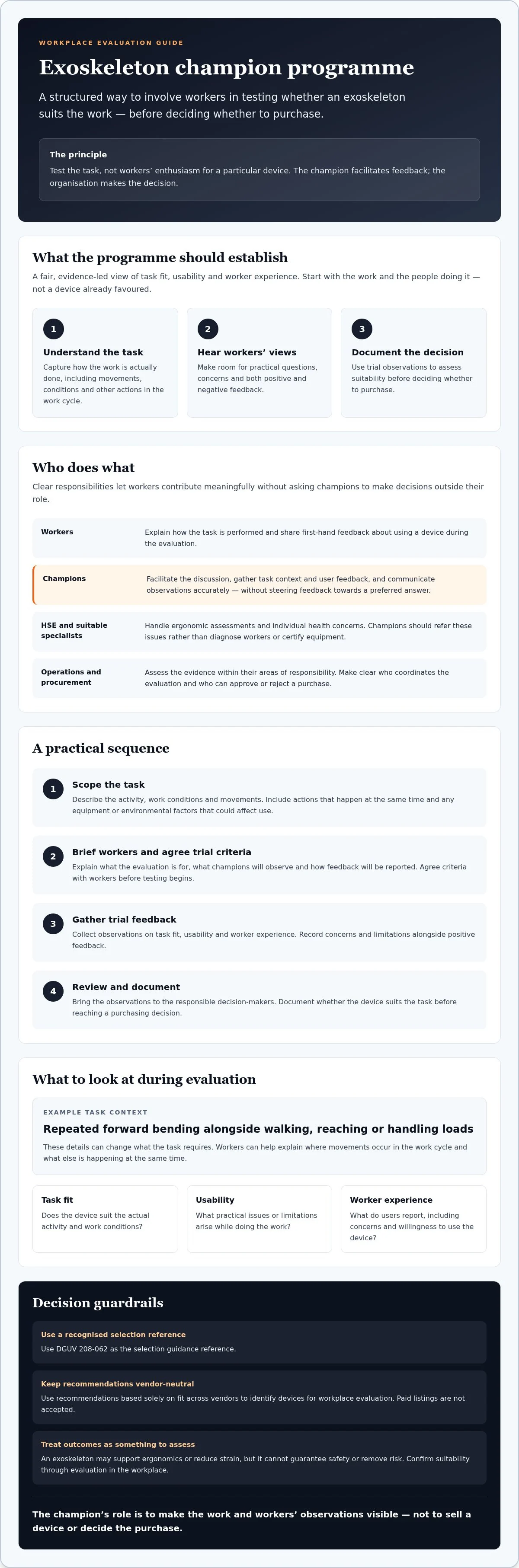
An exoskeleton champion programme is a structured way to involve workers in evaluating whether an exoskeleton suits particular workplace tasks. Its purpose is to gather practical observations about task fit, usability and worker experience before a purchasing decision.
The champion is a facilitator, not a product advocate. They help colleagues describe how work is done, raise concerns and share feedback with the people responsible for the evaluation. That distinction matters: a trial should test whether a device suits the work, not persuade workers to accept a predetermined choice.

Why assign champions before choosing a device?
Task demands can be easy to overlook from a desk or during a short demonstration. Workers can explain where a movement occurs in the work cycle, what other actions happen at the same time, and whether equipment or the environment could affect use. For example, a task may involve repeated forward bending alongside walking, reaching or handling loads. Those details help the organisation decide what to evaluate.
Champions bring this context into the discussion early. They can ask questions and report practical feedback, while HSE, operations and procurement colleagues retain responsibility for their respective assessments and decisions. The aim is a fair evaluation of task fit, usability and worker acceptance, not enthusiasm for a specific product.
What the programme is, and what it is not
An exoskeleton champion programme is a structured workplace evaluation in which selected workers help gather task context and user feedback so the organisation can assess exoskeleton suitability before deciding whether to purchase.
It is not an engineering project to design or build an exoskeleton. Human exoskeletons include different approaches and applications; the Human exoskeleton overview provides broader background. At work, the decision is more specific: does a device suit the task, environment and people who would use it?
Champions also don’t replace product sales representatives, HSE expertise or professional ergonomic consultancy. They should not diagnose workers, certify equipment or make the procurement decision. Their role is to bring workers’ observations into a process led by the appropriate decision-makers.
An exoskeleton may support ergonomics or reduce strain, but it cannot guarantee safety or remove risk. Treat these as potential outcomes to assess in the workplace, alongside any limitations or disruption. Creating an exoskeleton champion program gives the organisation a clearer way to collect evidence before committing to a device.
Choose champion responsibilities around real tasks and workers
A champion programme needs clear roles before anyone starts collecting feedback. Workers bring first-hand knowledge of the task. Champions organise that input and communicate it accurately. HSE, operations, procurement and relevant decision-makers assess it within their areas of responsibility. Make one person or function accountable for coordinating the evaluation, and state who can approve or reject a purchase.
This structure keeps worker involvement meaningful without making champions responsible for decisions they aren’t qualified or authorised to make. Their job is to describe what happens during the work and pass on questions, not to diagnose a health concern or certify an exoskeleton.
Who should become an exoskeleton champion?
Choose people who understand the tasks under consideration and can speak candidly with colleagues. A respected worker who raises practical concerns is often more useful than someone selected because they already support a particular device. Where practical, include perspectives from relevant shifts, roles or work areas, so the evaluation doesn’t reflect only one part of the operation.
Champions should listen without steering feedback towards a preferred answer. Their credibility depends on making room for both positive and negative observations, including issues that could affect task performance or willingness to use the device.
Define boundaries, time and escalation routes
Document what champions are expected to observe and how they should report it. Keep the scope task-based: describe the activity, movements, work conditions, questions and user feedback. If a worker raises an individual health concern, or an issue requires ergonomic judgement, the champion should refer it to HSE or a suitable professional adviser rather than trying to resolve it themselves.
Agree how observations reach the programme lead and decision-makers, and how urgent operational concerns are escalated. Clarify the time commitment and any briefing or preparation based on your organisation’s needs. Don’t assume a fixed champion-to-worker ratio or mandatory training requirement without assessing your operation.
- Workers: describe the task and share their experience.
- Champions: gather questions and observations, then relay them without filtering out criticism.
- HSE and professional advisers: address safety and ergonomic matters within their expertise.
- Operations: assess how the evaluation fits the work process.
- Procurement and decision-makers: consider the evidence and retain accountability for the purchasing decision.
Creating an exoskeleton champion program works best when responsibilities are visible from the start. For an independent route from workplace questions to a fit-based recommendation, review Ryggo’s exoskeleton matching process.
Ready to find the right device for your operation?
Find my exoskeleton →Build an evidence-led programme without turning champions into salespeople
A device demonstration shows what an exoskeleton can do. It doesn’t establish whether it suits a specific task across a full working day. Start with the job: the movements involved, loads handled, work environment and points where workers experience physical demand. Use DGUV 208-062 as the selection guidance reference, then assess possible options against the task rather than a preferred product.
This distinction keeps the evaluation from becoming a sales exercise. Champions should gather observations and questions, not advocate for a device. A workplace trial can examine how the exoskeleton feels and functions during the work it is intended to support. Agree the evaluation criteria before the trial so the team knows what evidence to collect and can compare feedback consistently.
Agree what evidence the team needs
Record the task conditions and the questions workers want the evaluation to answer. Keep feedback prompts practical and consistent across participants. For example:
- Comfort: Is the device comfortable to wear during the task, and are there pressure points or other concerns?
- Movement: Does it support the required movements, or restrict reaching, bending, walking or handling?
- Usability: Can workers use it as intended within the task and work environment?
- Compatibility: Does it fit the task sequence, equipment and other work requirements?
Record what workers report separately from the conclusions the team draws. Feedback that a device feels supportive is useful evidence of user experience. It is not proof that the device prevents injury or guarantees a safety outcome. Potential strain reduction and ergonomic support must be evaluated in the workplace.
Use screening responsibly
A short workplace video can produce an automated RULA-based screening estimate to help identify tasks for further consideration. RULA categories are: 1-2 negligible, 3-4 low, 5-6 medium, and 7 high. Treat these as screening context, not as a standalone decision about whether an exoskeleton is suitable.
The estimate is not a certified assessment and does not replace professional ergonomic consultancy. Use it alongside task information and worker feedback, with appropriate HSE or professional input where needed.
For creating an exoskeleton champion program, the final recommendation should be traceable to the task evidence. Ryggo does not accept paid listings, and its recommendation is based solely on fit across vendors. Champions contribute relevant observations, while decision-makers review the evidence and retain responsibility for the purchasing decision.
Run the champion programme through preparation, trial, and review
A structured sequence keeps the evaluation tied to the work, not general enthusiasm for a new device. Before participation begins, confirm which task is being assessed, who will take part, the trial period and how the team will judge the results. Make these details clear to workers and decision-makers in advance.
- Scope the task. Describe the work activity, its movements and conditions, and the questions the evaluation needs to answer.
- Brief participants. Explain why the organisation is considering an exoskeleton, what remains undecided and how workers can share feedback.
- Run the trial. Use the agreed criteria during the chosen trial period. Keep observations linked to the task and the experience of using the device.
- Review the evidence. Summarise feedback, identify unresolved questions and compare findings with the task requirements before deciding what to do next.
Prepare workers and the operation
Be candid about the purpose. The organisation is assessing whether an exoskeleton may support ergonomics or reduce strain during a specific task. It hasn’t committed to buying a device, and participation shouldn’t be presented as an endorsement. Tell workers how feedback will be gathered and who will review it.
Confirm practical arrangements before the trial starts, including device onboarding, training and service. Vendors provide delivery, onboarding, training and service. Ryggo’s Deploy & Decide trials are available for 2, 4 or 8 weeks. Set the chosen period and evaluation criteria before participants begin, so expectations are clear.
If the organisation uses Ryggo’s workplace matching process, a 30-second workplace video and a short task survey help inform the recommendation. Uploaded videos are deleted after analysis. The video produces an automated RULA-based screening estimate, which doesn’t replace professional ergonomic consultancy.
Review trial feedback before making a decision
Ask champions to summarise what workers observed against the agreed criteria. For example, note whether the device supported the intended movement, affected another part of the task or raised usability concerns. Include differing views and unresolved questions; don’t reduce the review to a single overall verdict.
Decision-makers should compare these observations with the original task requirements and consider whether further assessment is needed. Trial findings provide evidence for a purchasing decision, not proof that risk has been eliminated or that the device will suit every worker or task. Creating an exoskeleton champion program this way gives feedback a clear route into the decision without handing accountability to champions.
To assess suitable options in your workplace before purchasing, explore Deploy & Decide trials.
Connect champions to a vendor-neutral exoskeleton decision
Champions contribute evidence; they don’t choose the product or take over procurement. Their task observations and worker feedback help decision-makers assess whether a recommended exoskeleton fits the work. Keep that separation clear: champions report what happens during the task, while responsible managers review the evidence, costs and operational implications before deciding whether to buy.
Ryggo is Europe’s first independent exoskeleton exchange. Its matching process uses a 30-second workplace video and a short task survey to help identify devices that may fit the task. Steps 1-3 take about 10 minutes. Selection is guided by DGUV 208-062, and recommendations are based solely on fit across vendors. Paid listings are not accepted.
The video produces an automated RULA-based screening estimate. It can inform task discussions, but it isn’t a certified assessment and doesn’t replace professional ergonomic consultancy. Champions can help ensure the task description and questions reflect the work as it is actually performed.
When an external matching and trial service may help
Comparing suitable options against workplace tasks can help an organisation avoid treating a demonstration as proof of fit. With Ryggo’s Deploy & Decide, companies can try recommended exoskeletons in their own operation for 2, 4 or 8 weeks before deciding whether to purchase. Champions can gather feedback against agreed criteria; decision-makers retain responsibility for the final choice.
If a trial is unsuccessful, the refund is up to 75% for a 2-week trial, 70% for a 4-week trial, or 60% for an 8-week trial. If the organisation proceeds to purchase, the trial fee is fully credited towards the purchase, so no double payment is required.
Give champions a clear next step
Before seeking a recommendation, ask champions and task owners to document the activity being assessed, the people involved, the task conditions and the questions still open. This gives the matching process a practical starting point and keeps the evaluation focused on operational fit rather than general interest in a device.
For a deeper pilot plan, consult an industrial exoskeleton trial programme guide and agree how findings will inform the purchasing decision. If an independent matching and trial route would help your evaluation, explore Ryggo’s independent exoskeleton exchange.
Not sure which exoskeleton fits your task? Let the Ryggo advisor match it independently.
Find my exoskeleton →Turn worker insight into a confident decision
A champion programme works when responsibilities are clear and worker feedback stays connected to real tasks. Champions gather observations; HSE, operations and procurement assess the evidence and retain decision-making responsibility. That structure helps your organisation evaluate task fit and usability before committing to a purchase.
Creating an exoskeleton champion program is not about building support for a predetermined device. It’s about making a fair, documented decision. Ryggo provides fit-based recommendations across vendors, and paid listings are not accepted. Its Deploy & Decide trials let organisations assess recommended exoskeletons at work before buying. If you proceed to purchase, the trial fee is fully credited towards it, with no double payment required.
Ready to move from task questions to an independent recommendation? Explore Ryggo’s independent exoskeleton exchange and consider which workplace task to evaluate first. With worker insight and a structured trial, your team can take the next step with greater clarity.
Frequently Asked Questions
What does an exoskeleton champion do in a workplace?
An exoskeleton champion helps workers and decision-makers evaluate how a device fits a real task. They gather task context, invite colleagues to share questions and feedback, and pass observations to the programme lead. They don’t diagnose workers, certify equipment or sell a particular product. HSE, operations, procurement and other decision-makers retain responsibility for specialist assessment and any purchasing decision, according to their organisational roles.
How do you choose an exoskeleton champion for a warehouse or factory?
Choose someone who understands the work and can communicate candidly with colleagues. Credibility with the people doing the task matters more than enthusiasm for a particular device. Where practical, include perspectives from relevant shifts, roles or work areas. Champions should report concerns as well as positive feedback, so decision-makers hear a balanced account of how the exoskeleton fits the task and working environment.
Can an employee champion replace an ergonomics professional?
No. A champion can gather task observations and worker feedback, but shouldn’t diagnose health concerns, certify equipment or make specialist ergonomic judgements. Refer those matters to HSE or a professional ergonomic adviser. For example, a champion may report that a device appears to restrict a movement needed for the task; an appropriate professional can assess the concern in context. A Ryggo screening estimate also doesn’t replace professional ergonomic consultancy.
How can a champion programme help workers evaluate an exoskeleton before purchase?
A programme gives workers a clear way to contribute before procurement decides whether to buy. Champions help explain what the trial is assessing, gather feedback against agreed criteria and relay concerns without promoting a preferred device. When creating an exoskeleton champion program, make the task, trial period and evaluation questions clear from the outset. This helps the organisation weigh practical experience alongside operational and ergonomic considerations.
What should an exoskeleton champion measure during a workplace trial?
Keep observations tied to the task and agreed evaluation criteria. Ask workers about comfort, movement, usability and compatibility with the activity, equipment and work environment. Record specific examples, such as whether the device restricts reaching or affects another movement required by the task. Separate what participants observed from assumptions about outcomes. Trial feedback can inform a decision, but it doesn’t prove that an exoskeleton prevents injury or removes risk.
Is a RULA score from a workplace video a certified ergonomic assessment?
No. A workplace video produces an automated RULA-based screening estimate, not a certified ergonomic assessment. It can help inform task discussions and device matching, but it doesn’t replace professional ergonomic consultancy. Treat the estimate as one input alongside task context, worker feedback and appropriate professional advice. It shouldn’t be used by a champion to diagnose an individual worker or certify that a particular exoskeleton is suitable.
How long does Ryggo’s exoskeleton matching process take?
Ryggo’s matching steps 1-3 take about 10 minutes. The process uses a 30-second workplace video and a short task survey to describe the work and support a fit-based recommendation. Selection guidance follows DGUV 208-062. The video produces an automated RULA-based screening estimate, which doesn’t replace professional ergonomic consultancy. Uploaded workplace videos are deleted after analysis.
Find the right device before you trial anything
The Ryggo advisor maps your task, environment, and requirements to compatible devices — independently, across the full European market.
Find my exoskeleton →