+ + + Ryggo.ai soon opens for business + + + Current prices and features are placeholders + + + Ryggo.ai soon opens for business + + + Current prices and features are placeholders + + + Ryggo.ai soon opens for business + + + Current prices and features are placeholders + + + Ryggo.ai soon opens for business + + + Current prices and features are placeholders + + + Ryggo.ai soon opens for business + + + Current prices and features are placeholders + + + Ryggo.ai soon opens for business + + + Current prices and features are placeholders
Europe's first exoskeleton exchange
Find the right exoskeleton for your operation
Independent AI recommendation across Europe's leading exoskeletons. Try before you buy.
Ryggo simplifies selecting and validating the right exoskeleton. It drastically reduces the time spent identifying suitable options and managing the evaluation process.
Upload video
Ryggo presents RULA scores for load, posture and movement.
AI video analysis
Describe operation
A 5-minute survey detailing your use case and workplace requirements.
Smart evaluation
Get your match
The optimal device matched to your operation — complete with rationale and ROI.
Transparent logic
Try before you buy
Test the device via our Deploy & Decide programme. Up to 75% refund if it’s not a fit.
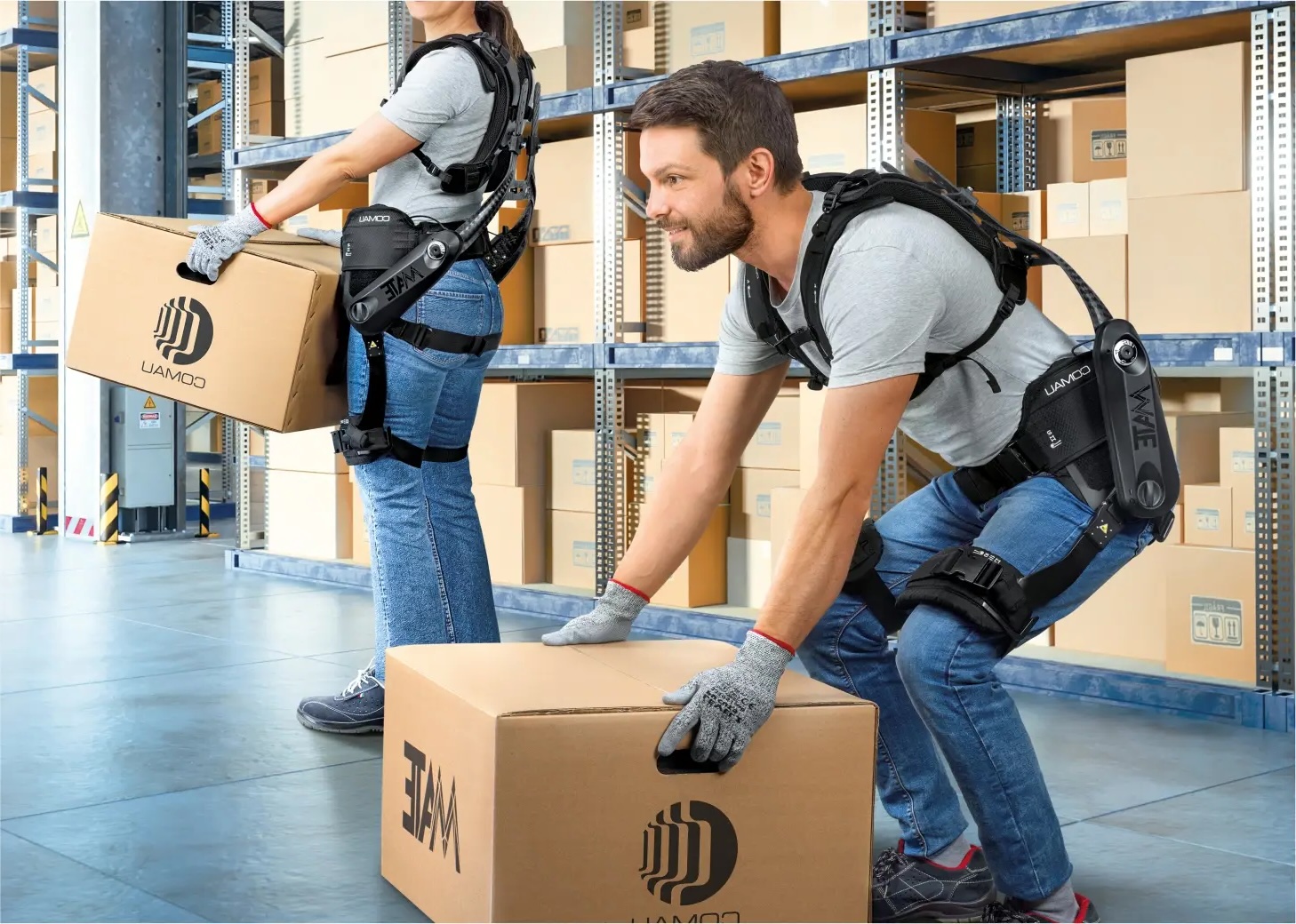
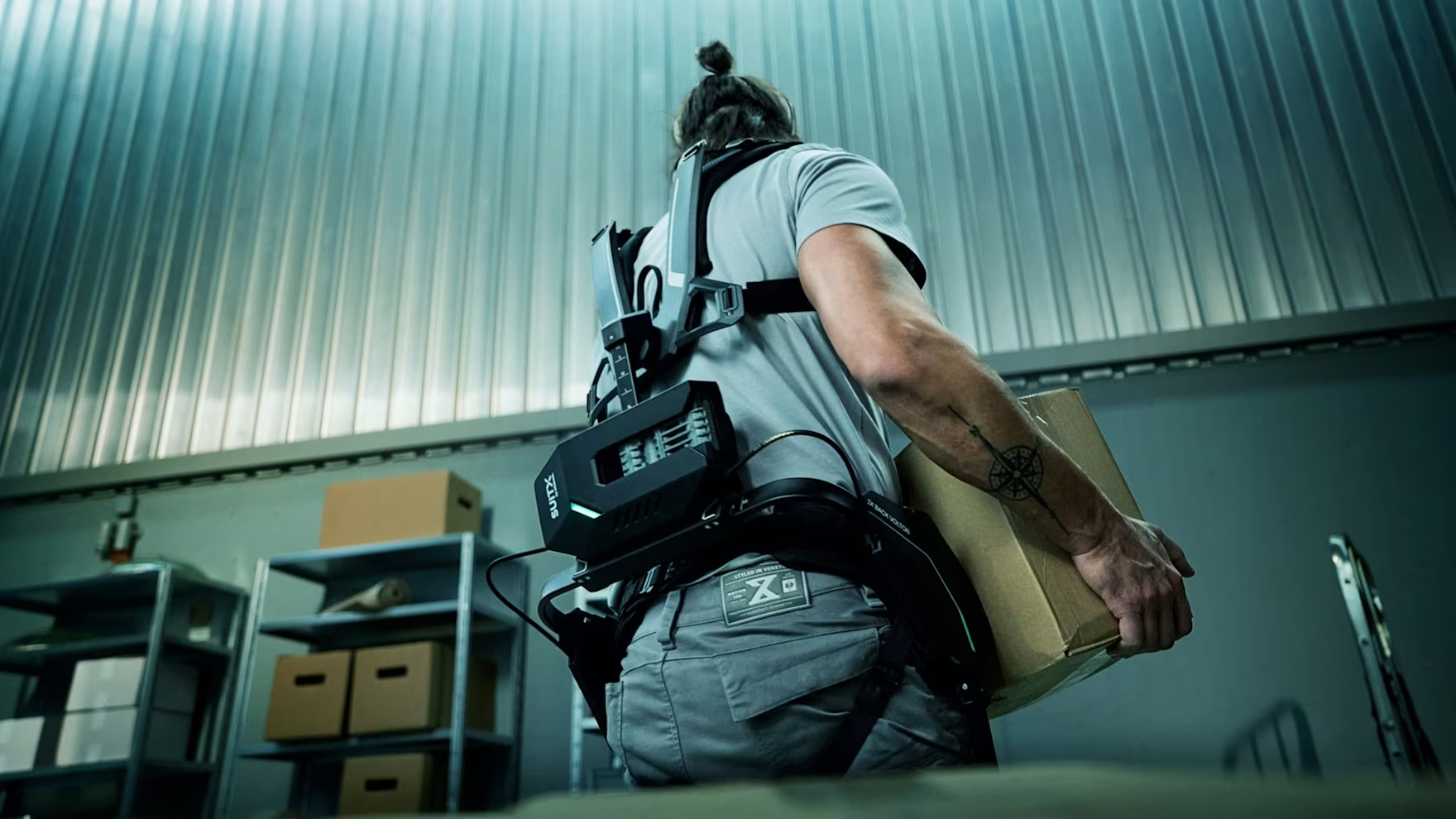
Passive, active or soft suit — for the back or the shoulder. Ryggo lists every established approach, so the technology fits your task instead of the other way round.
Buy under one set of commercial terms — even cross-border. One partner, less admin, local support and training in your language. Sign up with Ryggo just once.
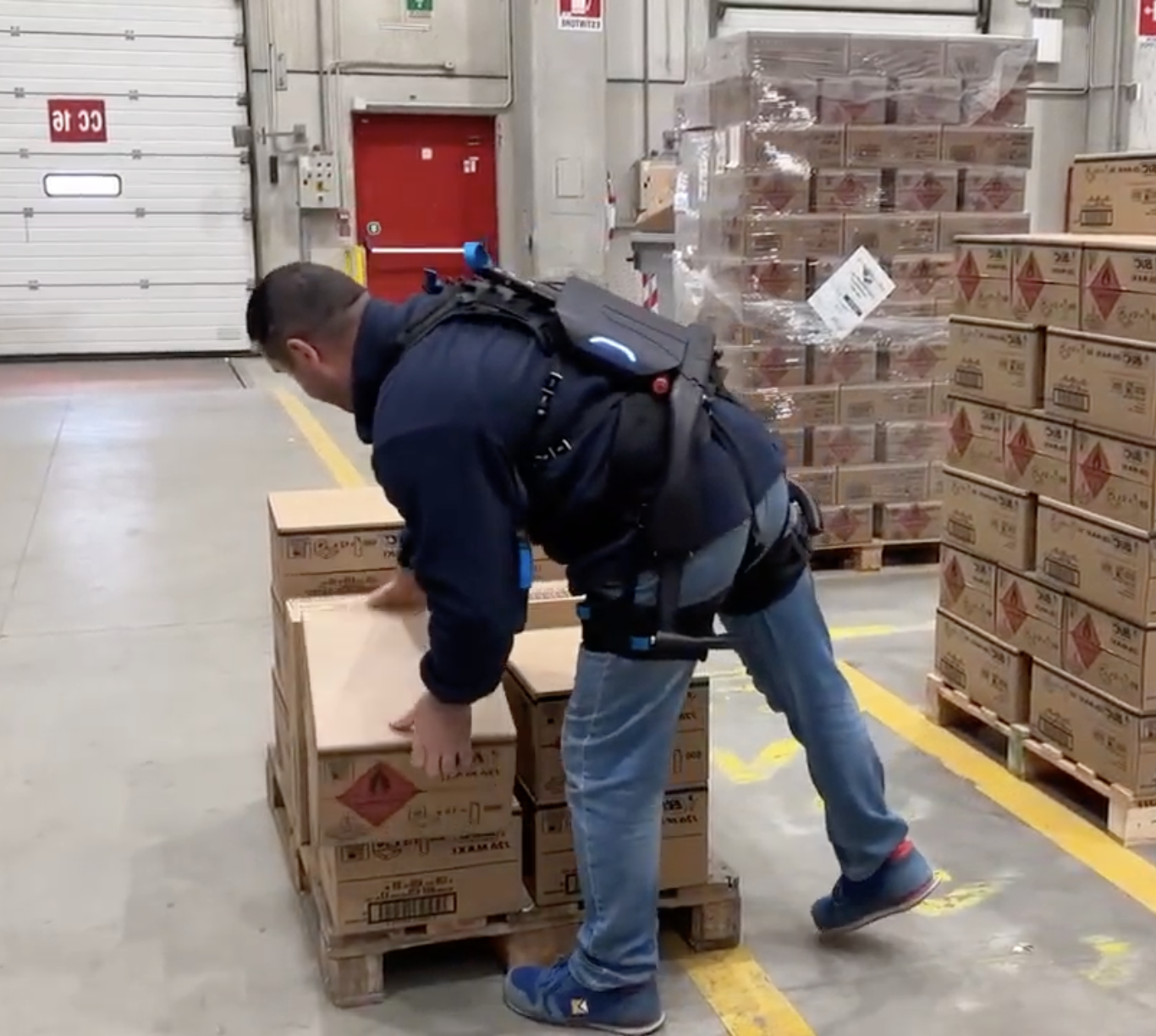
Upload a short video of the task. Ryggo's AI reads movement, load and posture, and returns a recognized RULA risk score in minutes — free, unlimited uploads.
A 5-minute survey matches your workplace and use-case with the most suitable devices — recommendations are based on fit alone. Paid listings are not accepted.
Over 80% of buyers want to test before committing. A one-day demo isn't enough — Ryggo lets you pilot the device in your own operation, or invest immediately.
Not sure which fits best and is preferred by your team? Select several devices on the Products page and trial them side-by-side, in your own operation, for 2, 4 or 8 weeks.
Ryggo offers optional onboarding and training, on-site or via video call. Each vendor runs this service its own way, charged per day (on-site) or per hour (video), shown clearly during the order process. We recommend adding it to each order.
Ryggo operates a direct drop-shipment model: hardware travels straight from the vendor to your doorstep. Delivery timelines and onboarding schedules are then coordinated directly between your team and the vendor.
Each vendor provides its own standard factory warranty and after-sales service, with a minimum of 12 months. Check the exact terms per vendor on the products page.
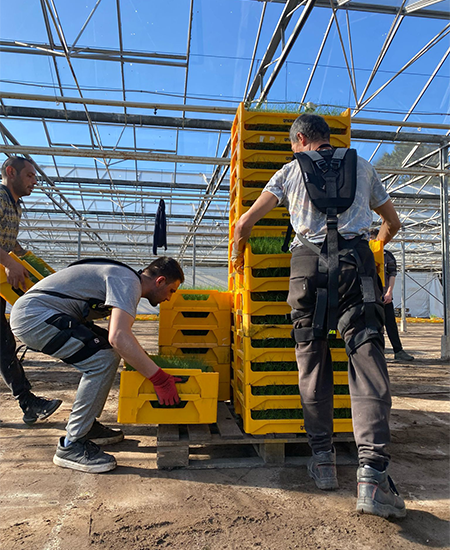
Construction
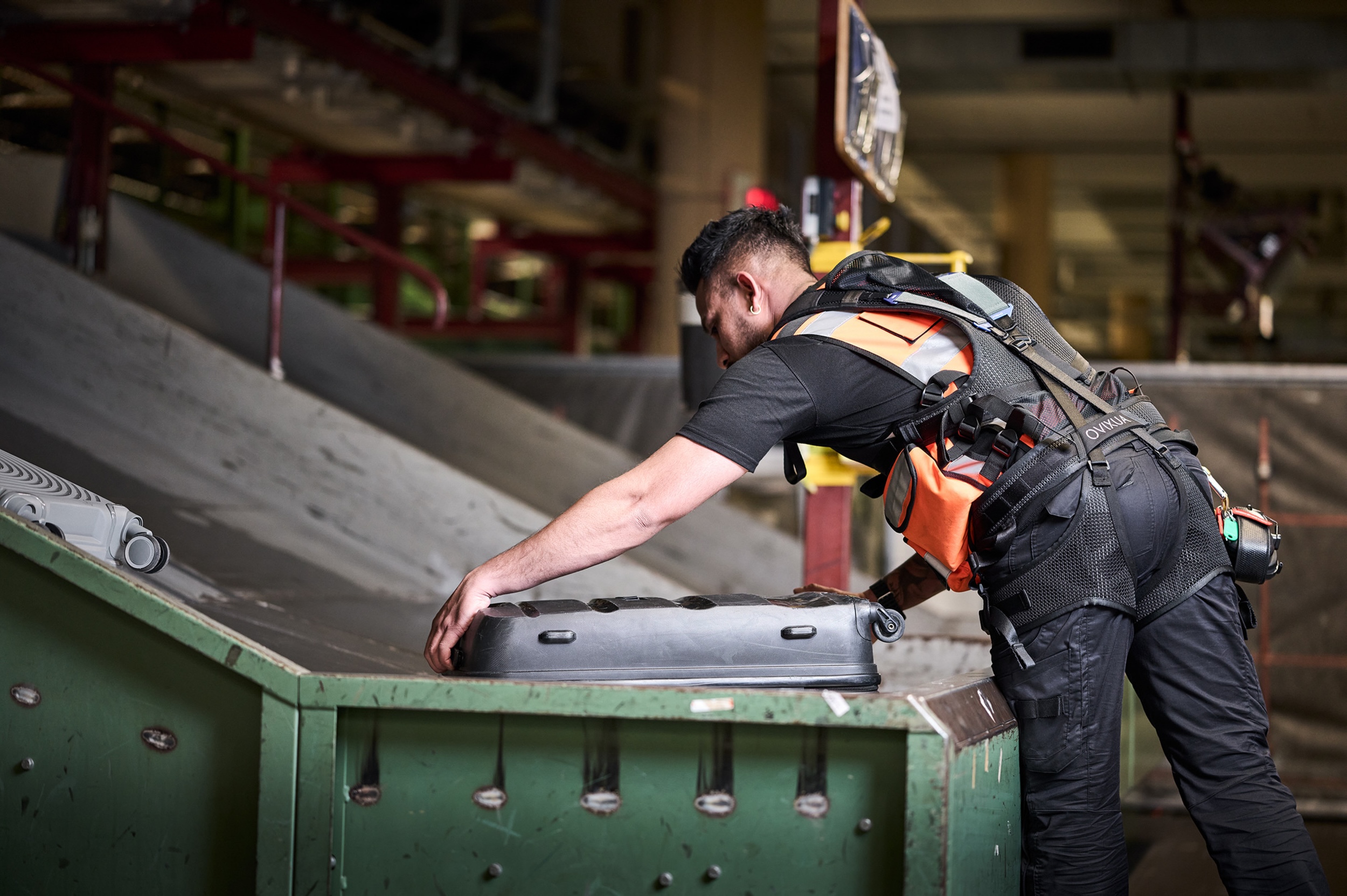
Growing usage everywhere
Exoskeletons transform physical work, also in your sector. We find the right one for you.
The DGUV — Germany's statutory accident insurance body — published a step-by-step framework for exoskeleton selection. It is the most comprehensive guidance from any European authority and directly applies across EU markets.
Every question in the Ryggo Advisor maps to these criteria, while our Deploy & Decide program mirrors the structured testing phase the framework requires before full deployment.
Deutsche Gesetzliche Unfallversicherung
DGUV
Information 208-062
Mensch und Arbeitsplatz
Auswahl und Einsatz von Exoskeletten
Published October 2025 · BG BAU
Framework requirements
Systematic task and environment analysis before device selection
Structured test and evaluation phase in the real work environment
Before and after measurement to validate device effectiveness
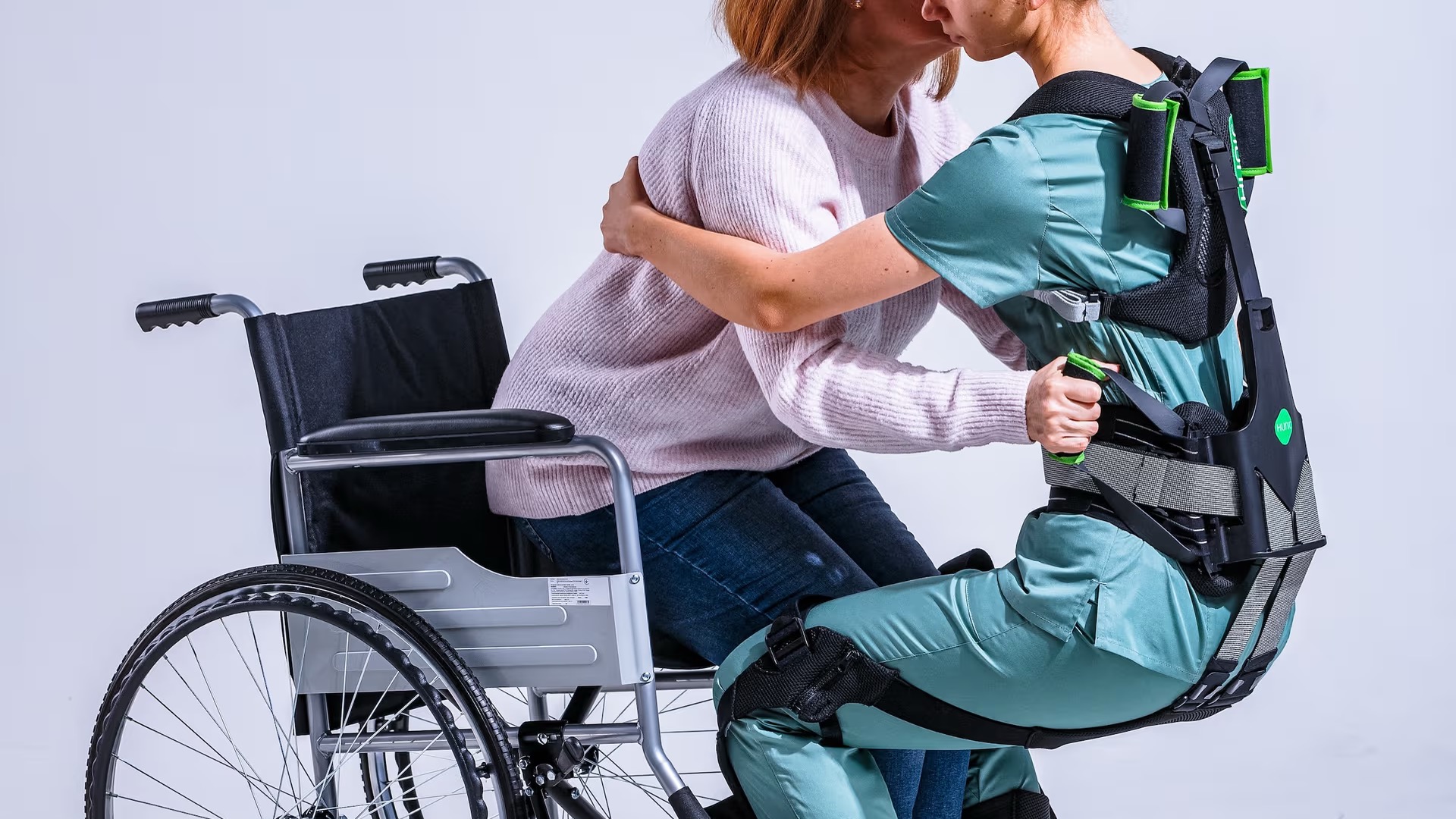
Nurses and care workers face some of Europe's highest back-injury risk. Exoskeletons are now used in hospitals and care homes to reduce physical load and improve staff retention.
Help center
Got questions? We've got answers.
General
What is the difference between passive and active exoskeletons?
Passive exoskeletons use mechanical springs or elastic elements to store and return energy — no battery required, lightweight, low maintenance. Active exoskeletons use electric motors and sensors to actively assist movement, delivering higher support levels and adaptability, but require charging and are heavier. Soft suits use flexible textiles and cables to guide movement with minimal rigidity. The right choice depends on your use case, load weight, shift duration and EPT environment.
What are the leading exoskeleton brands in Europe?
There are around 15 active manufacturers in the European market. Each tends to lead in a specific technology or use-case segment — passive support for logistics, active assistance for heavier industrial tasks, soft suits for dynamic or confined environments. Rather than ranking brands, Ryggo lists devices on merit and matches them to your operation. The right brand is the one that fits your specific use case.
How much does an exoskeleton cost?
Purchase prices range from around €1,000 for entry-level soft suits to €10,000 or more for advanced active exoskeletons — for both back and shoulder devices. Passive devices typically fall in the €2,000–€5,000 range. The right budget depends on the support level required and the number of units. Ryggo shows transparent pricing for every listed device — no hidden costs, no sales calls required to get a number.
Can I trial exoskeletons before buying?
Yes — and you should. Around 80% of buyers request a test period even after a successful demo. Ryggo's Deploy & Decide programme gives you a structured evaluation: devices are deployed to your team for a defined period, with a clear return option if the device isn't the right fit. No open-ended commitment, no pressure to buy.
How much does an exoskeleton pilot cost?
Pilot costs through Ryggo depend on the number of units, the duration of the evaluation and the device. The evaluation fee is transparently calculated — you see the full cost before committing. If the pilot leads to a purchase, the evaluation fee is offset against the order. Use the Ryggo Advisor to get a recommendation and a full cost overview for your operation.
Back exoskeletons
What is a back exoskeleton and how does it work?
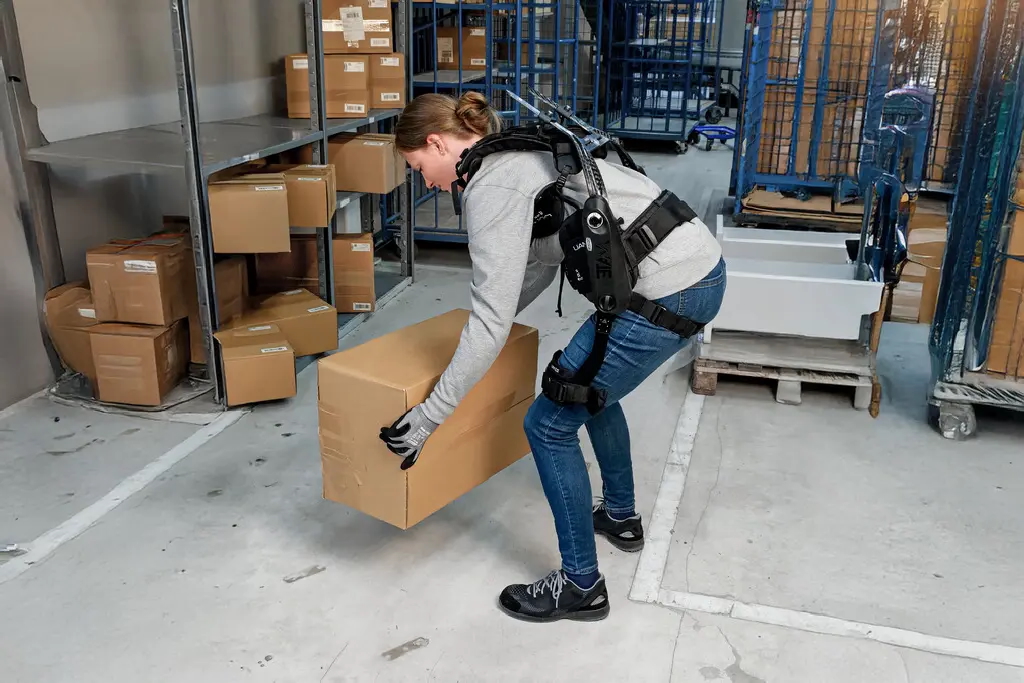
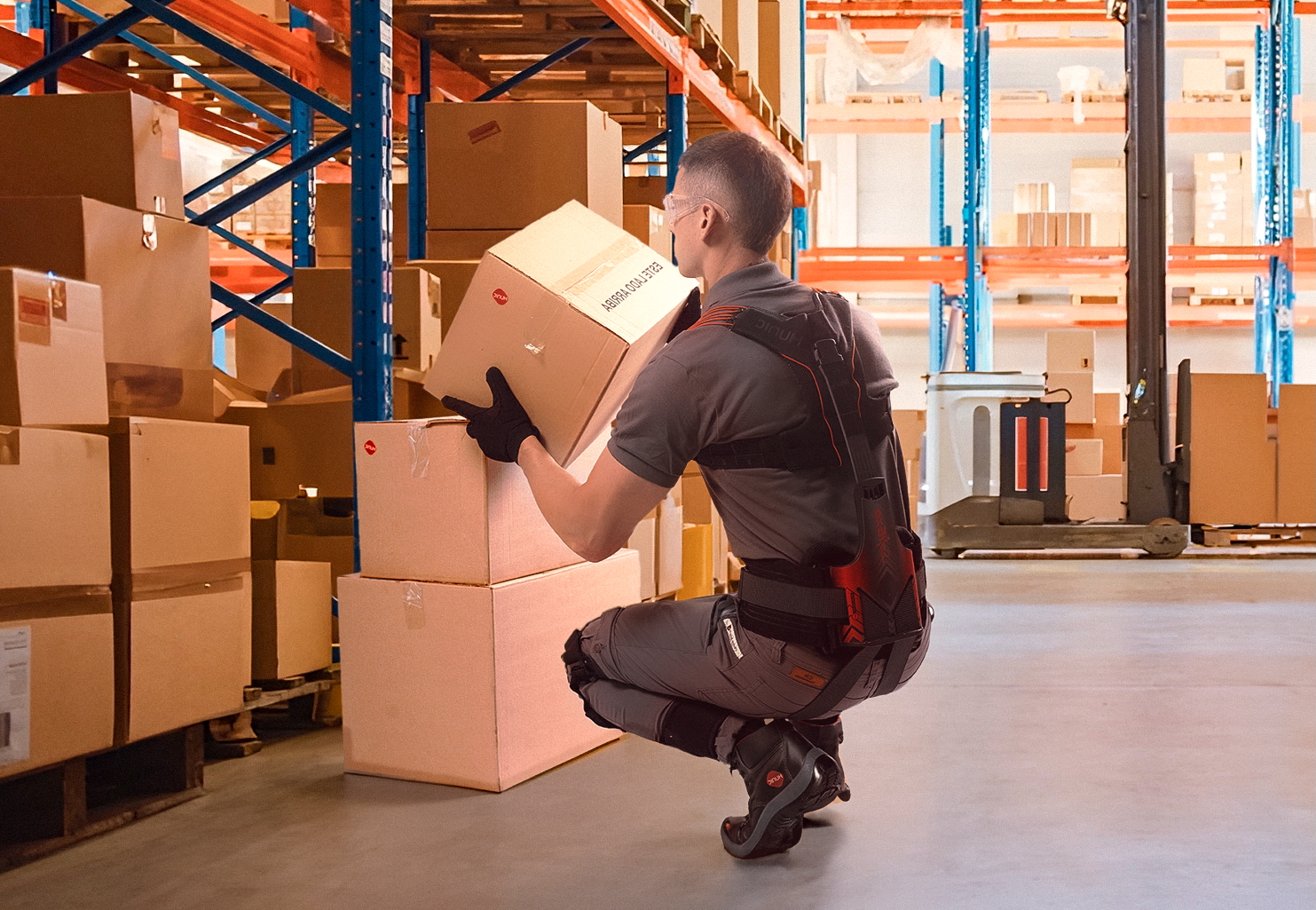
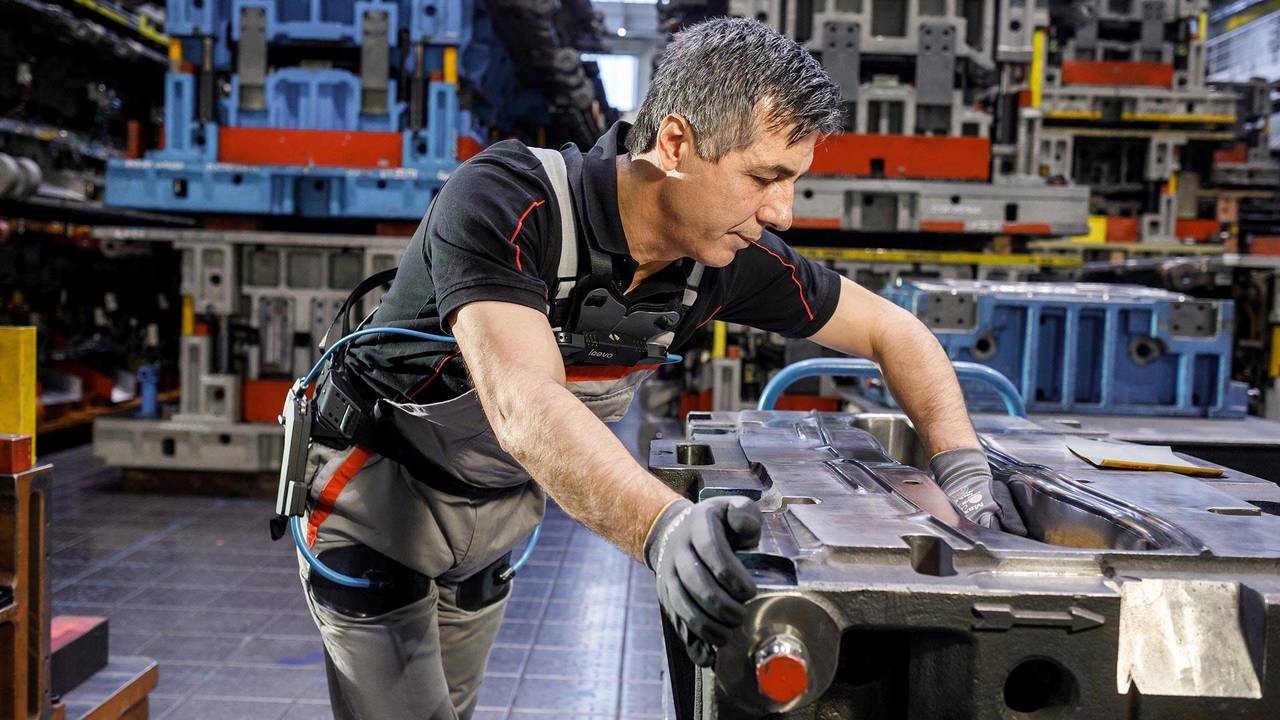
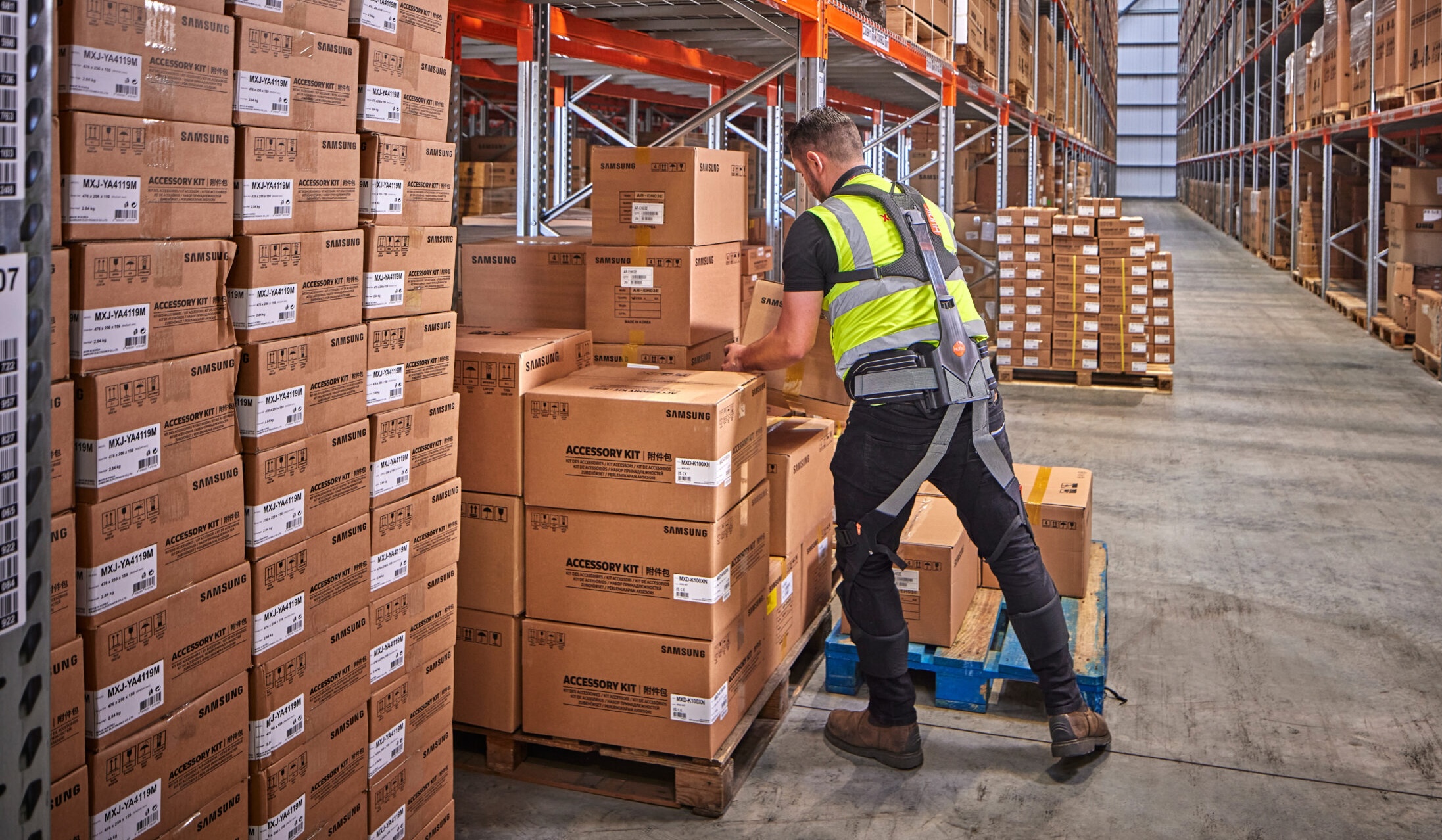
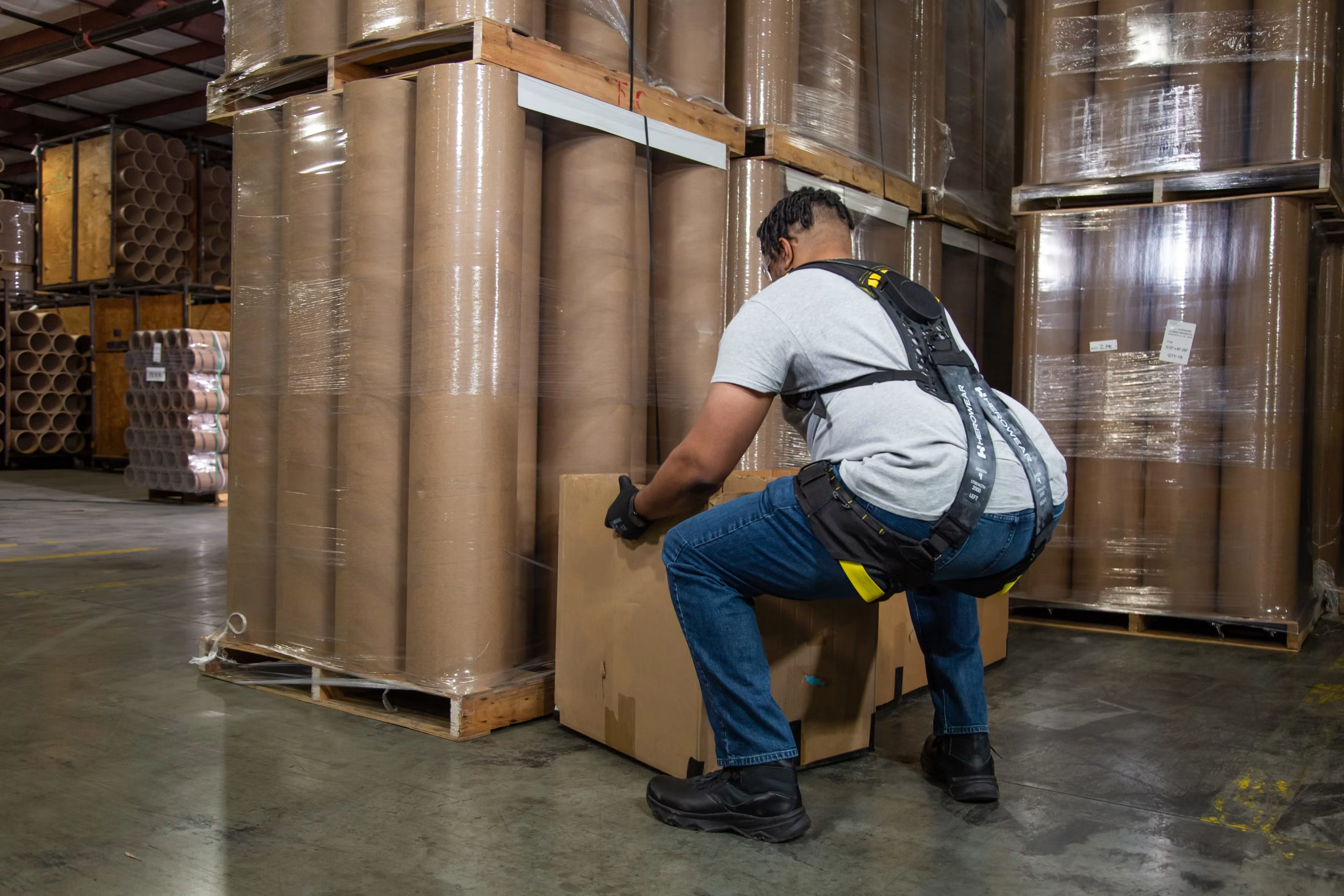
A back exoskeleton is a wearable support device that reduces the physical load on the lower back during repetitive or heavy tasks. It works by transferring force away from the spine — either through mechanical springs (passive), powered actuators (active), or flexible textile structures (soft suits). Workers wear the device during their shift; it activates automatically during bending, lifting or carrying movements.
Which back exoskeleton is right for my operation?
The right device depends on several factors: the dominant movement (bending, lifting, carrying), load weight and frequency, work environment (indoor/outdoor, EPT areas), shift duration and team size. The Ryggo Advisor asks you exactly these questions and matches your operation to the most suitable devices — with transparent reasoning, not a black-box result.
How do I recognise a good use-case for a back exoskeleton?
Many operations involve bending, lifting, lowering, or prolonged forward leaning — but that alone doesn't make a strong use-case. Workers may do these movements briefly, in confined spaces, or while stepping on and off an EPT. Context matters.
Three criteria all need to be met for a back exoskeleton to have a good chance of user acceptance:
Weight — a meaningful load is required. From around 4–5 kg upwards; many use-cases involve 15–20 kg or more.
Movement — the body must move through the task. Transferring a heavy load without bending or dynamic motion triggers little support — particularly from active devices.
Frequency — repetition is what makes support felt. A worker lifting 20 kg five times an hour may notice some benefit, but low frequency puts acceptance at risk. At that level, other lifting aids may be worth considering alongside.
When all three align — load, movement, and frequency — the use-case is strong and acceptance tends to follow.
Shoulder exoskeletons
What is a shoulder exoskeleton and who is it for?
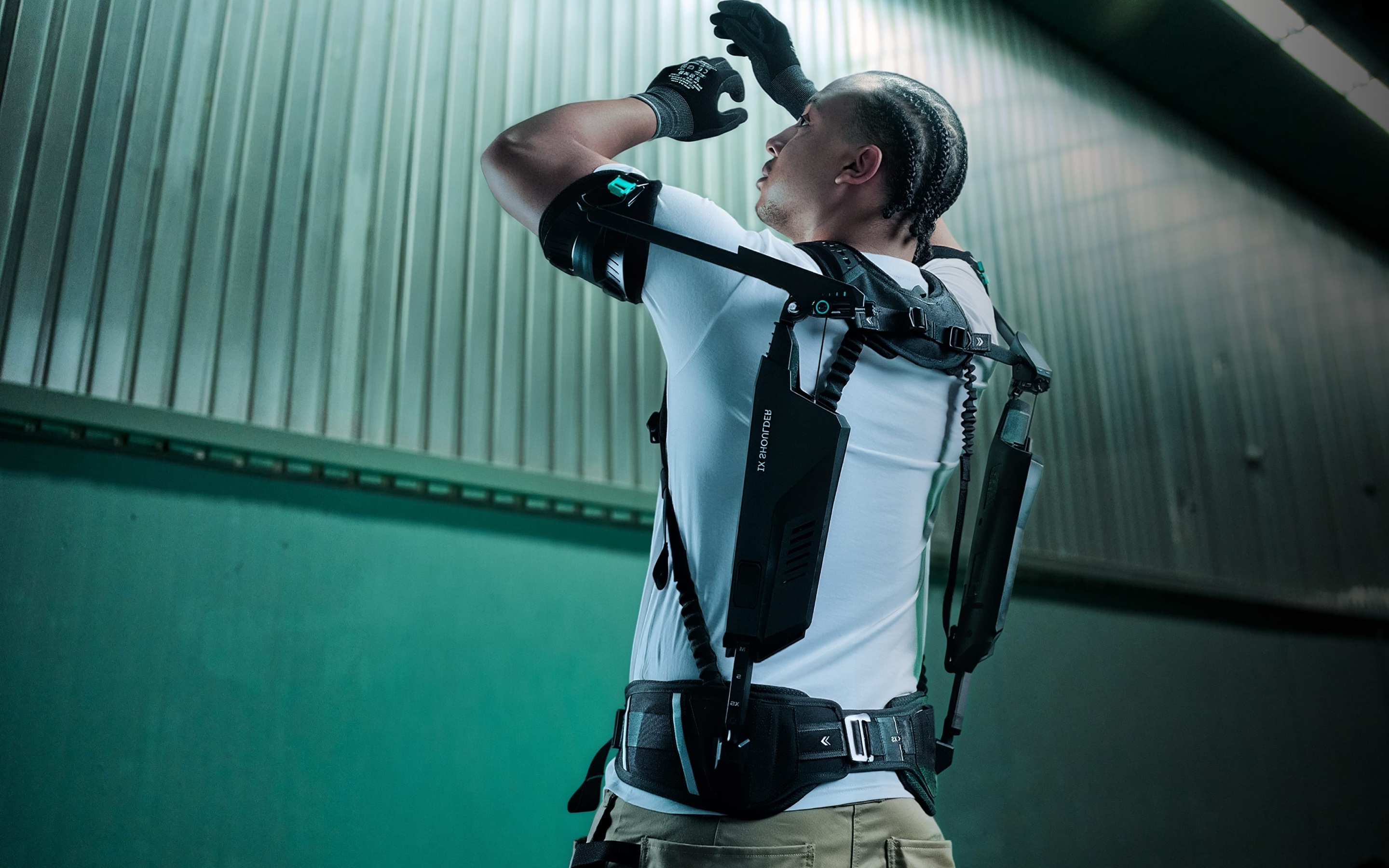
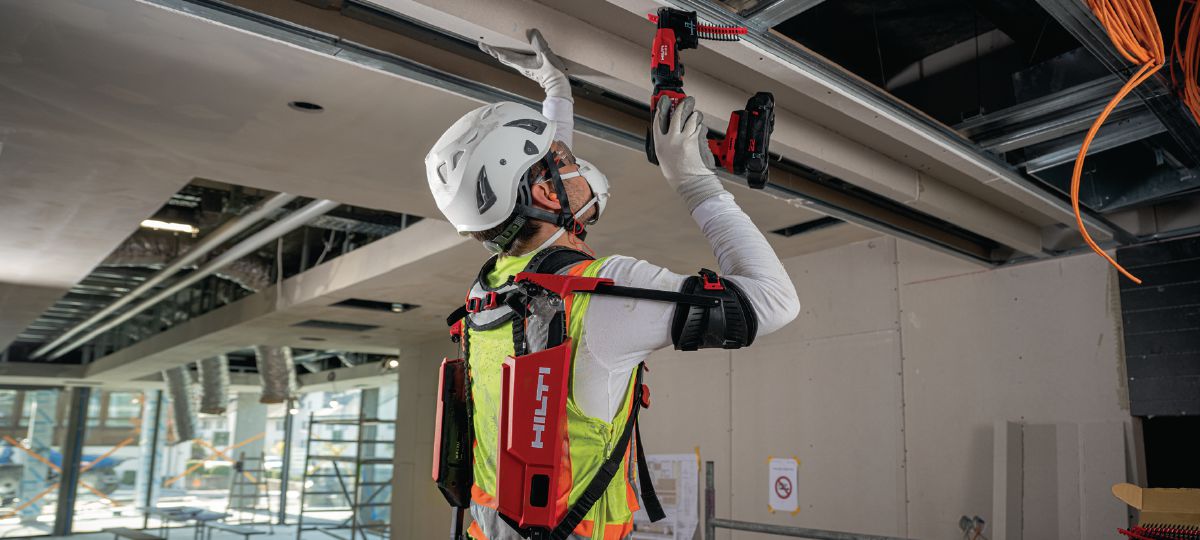
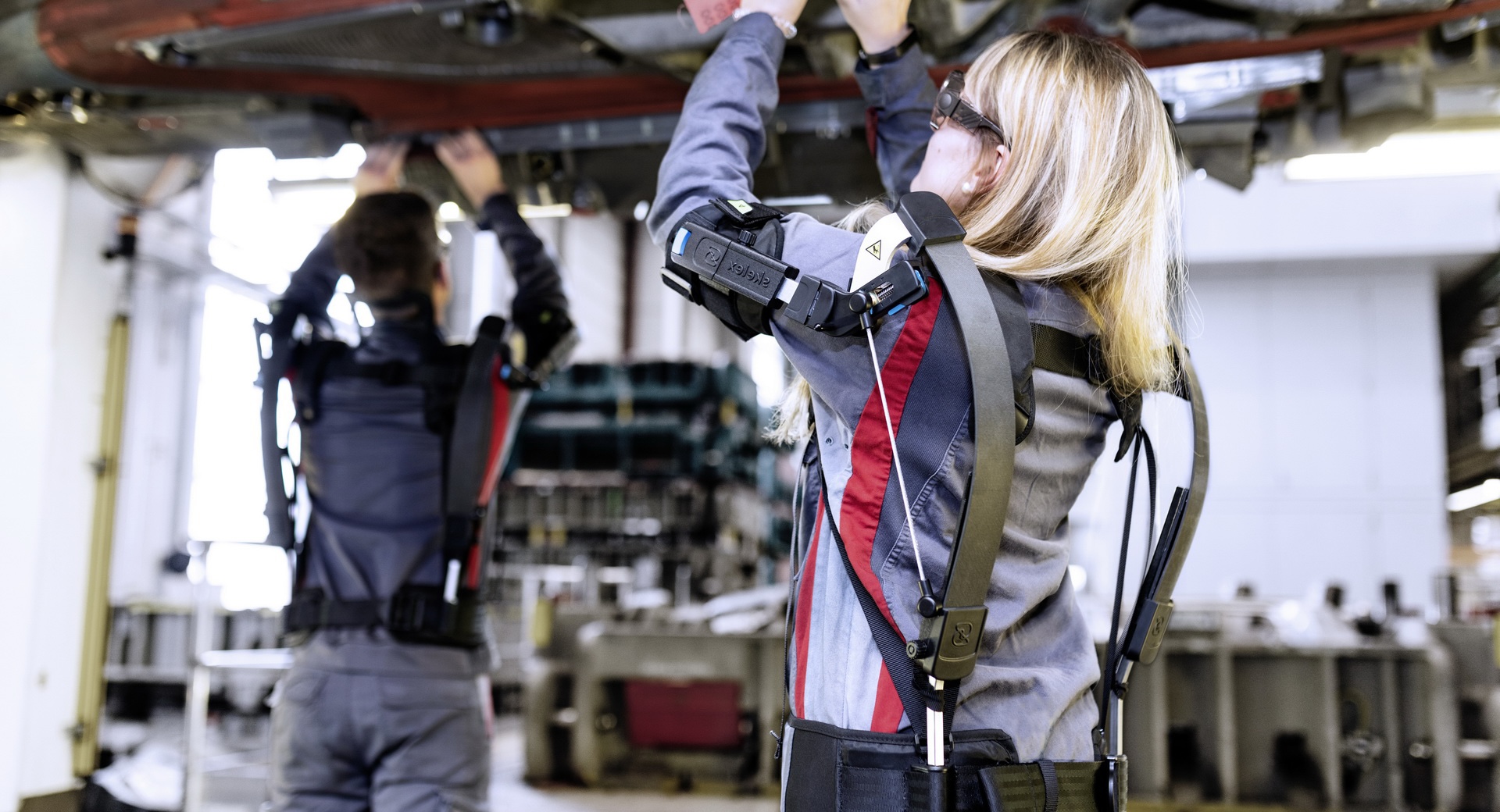
A shoulder exoskeleton is a wearable support device — worn like a backpack — that offloads the weight of raised arms to the hips or waist. It is designed for one specific class of task: working with arms at or above shoulder height for extended or repetitive periods. Overhead assembly, ceiling installation, painting, high-shelf picking. If your team regularly works arms-up for more than a few hours per shift, a shoulder exo is worth evaluating.
Can a shoulder exoskeleton restrict movement or slow workers down?
This is the most common concern — and the honest answer depends on fit and task type. Well-matched passive shoulder exos add minimal bulk and don't restrict arm movement in the working range. The risk increases if the device is used for tasks it wasn't designed for, or if sizing is off. Acceptance rates vary more for shoulder exos than back exos, which is exactly why a structured trial on your own floor matters before committing.
How is a shoulder exoskeleton different from a fixed arm support?
Fixed arm supports and tool balancers are mounted to a workstation — the worker moves around them. A shoulder exoskeleton moves with the worker, supporting the arm throughout the shift regardless of position. This makes it suitable for mobile tasks and multi-position work where a station-fixed solution isn't practical.